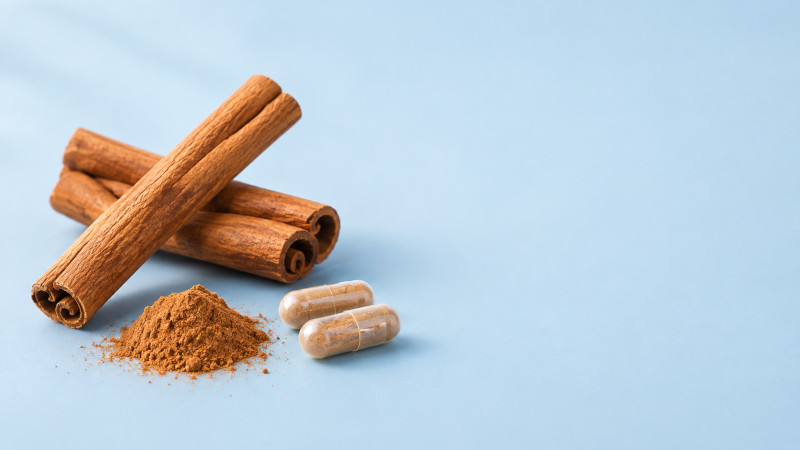
A Facebook ad for a cinnamon supplement opens with a doctor telling a story about her mother’s recurring urinary tract infections. Another begins with a customer asking for a refund and ends with claims of better blood pressure and A1c. Both stories use specific numbers that sound like clinical evidence. What’s missing is a study showing that the supplement being sold produced those results.
Cinnamon has shown some promise for lowering fasting blood sugar. In a 12-week randomized trial published in PLOS ONE in 2025, adults taking a standardized Ceylon cinnamon extract saw fasting glucose fall about 9 mg/dL more than with placebo. That was the average across the study population, which included adults with and without type 2 diabetes. The trial found no statistically significant difference in A1c, a measure of average blood sugar over roughly three months.1
A separate four-month trial in adults with type 2 diabetes reported improvements in both fasting glucose and A1c with a different Ceylon cinnamon extract.2 Across studies, though, researchers have used different cinnamon species, doses, and preparations, and results vary. The American Diabetes Association’s 2026 Standards of Care advise against using cinnamon supplements to improve blood sugar.3
When an ad gives you a dramatic before-and-after number, ask whether a controlled trial tested that product and reported that outcome. A study showing lower fasting glucose with one extract can’t tell you whether the product in your feed will lower your A1c, improve blood pressure, or prevent a UTI.
Cinnamon and Coumarin
Cinnamon is generally safe in the amounts used to season food. Some cassia cinnamon products, however, contain high levels of coumarin, a naturally occurring compound that can harm the liver with prolonged exposure, especially in people with liver disease. Ceylon cinnamon generally contains much less coumarin.4
References
- Muthukuda D, de Silva CK, Ajanthan S, et al. Effects of Cinnamomum zeylanicum (Ceylon cinnamon) extract on lipid profile, glucose levels and its safety in adults: A randomized, double-blind, controlled trial. PLOS ONE. 2025;20(1):e0317904. journals.plos.org
- Ranasinghe P, Galappatthy P, Constantine GR, et al. Efficacy and safety of Cinnamomum zeylanicum (Ceylon cinnamon) for diabetes mellitus: A randomized, double blind, placebo-controlled clinical trial. Diabetes & Metabolic Syndrome: Clinical Research & Reviews. 2025;19(12):103357. pubmed.ncbi.nlm.nih.gov
- American Diabetes Association Professional Practice Committee for Diabetes. Facilitating positive health behaviors and well-being to improve health outcomes: Standards of Care in Diabetes—2026. Diabetes Care. 2026;49(Suppl 1):S89–S131. See recommendation 5.16.
- National Center for Complementary and Integrative Health. Cinnamon: Usefulness and Safety. National Institutes of Health.