JCS/T2D JCS/T2D
JCS/T2D JCS/T2D
  • Home
  • About
  • Disclaimer
  • Privacy

JCS/T2D - We are advocates. We learn. We share. We inform.

Details
By J. Smith
J. Smith
Articles
24 May 2026
Last Updated: 24 May 2026
Hits: 66
  • Medication Safety
  • Peptides
  • BPC-157
  • Gray-Market Peptides
  • Evidence-Based Medicine

Promising Science Is Not the Same as Proven Medicine

Clinical Validation Funnel

Large Clinical Validation Funnel Graphic (PDF): https://drive.google.com/file/d/1lKioUGkTtsc9Y_Z0KwtibNJUtcvrzC_K/view?usp=sharing

Summary

Peptides have become popular in wellness, fitness, longevity, and metabolic health discussions, but not all peptides belong in the same category. FDA-approved peptide medications, including insulin and GLP-1 receptor agonists, have been studied in human clinical trials, reviewed by regulators, prescribed by clinicians, and monitored after approval. Gray-market “research peptides” such as BPC-157 are different. They may be promoted online for healing, recovery, inflammation, or optimization, but they often lack strong human evidence, clear dosing, reliable safety data, product quality controls, and meaningful medical oversight. The key issue is not whether peptides are good or bad. The real issue is whether a specific peptide has enough human evidence, manufacturing quality, and clinical monitoring to support its use.

Key Points

  • Approved peptide medications and gray-market peptides are not the same.
    Insulin and GLP-1 medications have clinical trial data, regulatory review, professional prescribing, and post-approval monitoring. Gray-market peptides may not have the same evidence or safeguards.
  • Known risks are different from unknown risks.
    Approved medications may have visible side effects because they have been studied and labeled. Unapproved products may appear safer simply because they have fewer studies, weaker monitoring, and less reporting.
  • BPC-157 claims go beyond the available human evidence.
    BPC-157 is often promoted for recovery, healing, inflammation, and optimization, but the post notes that it has a very small published human evidence base, no completed randomized controlled trials, no FDA approval, and a canceled Phase 1 trial that was never published.
  • Injection raises the stakes.
    Injectable peptides bypass the digestive system and may enter systemic circulation intact, creating important questions about dosing, absorption, half-life, receptor effects, off-target effects, and long-term safety.
  • This is partly a trust problem.
    People may trust social media stories, wellness clinics, influencers, or “optimization” messaging more than approved medications because those messages feel personal and empowering. But moving trust from regulated medicine to social media wellness marketing can mean moving into a system with fewer safeguards and less transparency.

Read more: Promising Science Is Not the Same as Proven Medicine

Details
By J. Smith
J. Smith
Articles
12 January 2026
Last Updated: 12 January 2026
Hits: 360
  • Type 2 Diabetes
  • Juleen Zierath
  • Exercise and Metabolism
  • Insulin Resistance
  • Skeletal Muscle

Professor Juleen R. Zierath: Three Decades of Showing How Exercise Changes Metabolism

Photo by Ricky Molloy. Courtesy of Novo Nordisk Foundation.

A look at the science that explains why exercise improves glucose regulation even when insulin cannot.

Abstract

Professor Juleen R. Zierath has spent more than three decades uncovering how exercise reshapes muscle metabolism and why these mechanisms matter for people with obesity or type 2 diabetes. Her work demonstrates that insulin resistance originates in skeletal muscle and that exercise can bypass this defect through alternative pathways that enhance glucose uptake. By connecting molecular biology, circadian timing, gene regulation, and real-world physiology, she has built a foundation for more personalized approaches to metabolic health. Her research offers insight into why movement remains one of the most effective tools for improving glucose regulation and overall metabolic function.

Key Points

  • Insulin resistance in type 2 diabetes occurs in the skeletal muscle, where defects in insulin signaling limit glucose uptake, making this tissue central to metabolic dysfunction.
  • Exercise bypasses impaired insulin pathways through contraction-driven mechanisms that activate AS160, AMPK, and GLUT4 movement, improving glucose uptake even when insulin is less effective.
  • Skeletal muscle is highly adaptable, and Zierath’s work shows how different types of training reshape fuel use, mitochondrial function, and long-term insulin sensitivity.
  • Epigenetic and circadian factors influence metabolic health, with exercise capable of modifying DNA methylation patterns and interacting with the body’s internal clocks to improve glucose control.
  • These insights point toward personalized exercise and nutrition strategies, grounded in genetics, timing, and individual metabolic responsiveness, rather than one-size-fits-all recommendations.

Read more: Professor Juleen R. Zierath: Three Decades of Showing How Exercise Changes Metabolism

Details
By J. Smith
J. Smith
Articles
11 January 2026
Last Updated: 11 January 2026
Hits: 389
  • Continuous Glucose Monitoring
  • Time in Range
  • Glucose Patterns
  • Diabetes Data Visualization
  • Emotional Impact of CGM

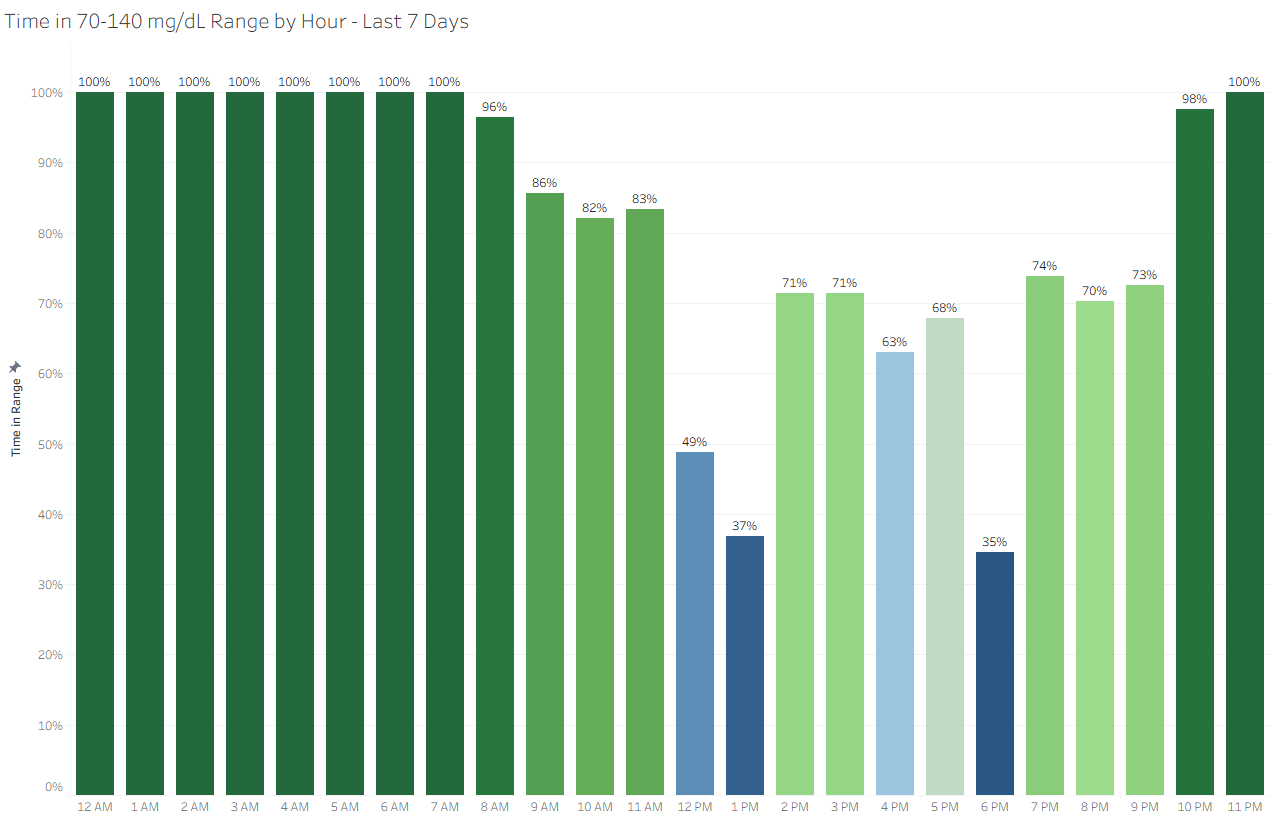
A More Human View of Glucose: How Hourly Visualizations Reduce Anxiety and Reveal Real Patterns

Hourly Time in Range (TIR)

Hourly glucose visualizations replace judgment with understanding by showing when patterns occur and reducing the emotional burden of daily performance scores.

Abstract

Continuous glucose monitoring provides valuable information, but traditional daily Time in Range summaries often create unnecessary emotional pressure. This article explores how hourly Time in Range and Coefficient of Variation visualizations offer a more supportive, more insightful way to understand glucose patterns. By focusing on timing, consistency, and possibility, these visualizations shift the experience from judgment to clarity and help people interpret their data with confidence.

Key Points

  • Daily percentages flatten important details and can feel like performance scores rather than meaningful descriptions of glucose patterns.
  • Hourly visualizations reveal timing, making it easier to understand post-meal spikes, overnight stability, and recurring trends.
  • Neutral design choices, including a green–blue color scale and multi-day aggregation, reduce judgment and lower emotional burden.
  • Perspectives from the diabetes community highlight the need for data tools that support understanding instead of creating guilt or anxiety.
  • Side-by-side views of time in range and variability help people and clinicians interpret patterns more effectively and focus on what is possible.

Read more: A More Human View of Glucose: How Hourly Visualizations Reduce Anxiety and Reveal Real Patterns

Details
By J. Smith
J. Smith
Articles
23 November 2025
Last Updated: 23 November 2025
Hits: 357
  • Wegovy
  • Obesity Treatment
  • GLP-1 Medicines
  • Drug Regulation
  • Medication Safety

Wegovy Will Not Go OTC: What the Sources Actually Say

Wegovy 2.4 mg Pens

A clear look at what Novo Nordisk actually said about Wegovy and why current GLP-1 therapies are not suited for OTC use.

Abstract

Discussion about Wegovy potentially moving to over-the-counter status has grown on social media, but the reporting does not support that interpretation. The statements from Novo Nordisk’s new board chair focus on strengthening consumer-oriented strategy, not pursuing OTC approval for GLP-1 therapies. This analysis reviews what was said, how it has been misinterpreted, and why current GLP-1 medications do not meet the safety, regulatory, or clinical requirements for OTC use.

Key Points

  • Official statements addressed board expertise, not an OTC pathway.
    The new chair emphasized interest in board members with OTC experience to support direct-to-consumer models, not to convert Wegovy to OTC status.
  • Social media amplified a speculative remark into an “inevitable” outcome.
    The reporting shows no regulatory plan, timeline, or active effort to make Wegovy an OTC product.
  • Current GLP-1 therapies cannot meet OTC safety standards.
    Injectable formulations require refrigeration, and both injectable and oral versions rely on mandatory dose escalation to manage side effects.
  • Unsupervised initiation poses clear clinical risks.
    Starting at a high dose without medical guidance increases the likelihood of severe nausea, dehydration, and other adverse events requiring medical attention.
  • GLP-1 medications treat chronic conditions requiring ongoing monitoring.
    Regulators expect screening and follow-up for this class, which creates built-in barriers to OTC approval.

Read more: Wegovy Will Not Go OTC: What the Sources Actually Say

  • 1
  • 2
  • 3
  • 4
  • 5
  • 6
  • 7
  • 8
  • 9
  • 10

Page 1 of 23

Articles

  • Promising Science Is Not the Same as Proven Medicine
  • Professor Juleen R. Zierath: Three Decades of Showing How Exercise Changes Metabolism
  • A More Human View of Glucose: How Hourly Visualizations Reduce Anxiety and Reveal Real Patterns
  • Wegovy Will Not Go OTC: What the Sources Actually Say
  • Bridging Data and Healthcare in the Nordics
  • How Well Do My CGM and BGM Readings Match?
  • Epigenetic Clues to Heart Risk in Type 2 Diabetes
  • Could a Gut Bacterium Help Transform Diabetes and Obesity Care?
  • Why mRNAs Are a Good Option for Vaccines
  • Why I Took Medical Courses to Strengthen My Data Skills
  • New Research Reveals the Hidden Complexity of Insulin Resistance
  • What the 2025 Diabetes Care Updates Mean for You
  • How an Hour-by-Hour View Transforms Time in Range Insights
  • Successfully Completed: Diabetes – A Global Challenge
  • Join the 5K@ADA Virtual Challenge to Promote Diabetes Awareness and Healthy Living
  • How Tirzepatide is Revolutionizing Type 2 Diabetes Prevention in Overweight and Obese Adults
  • Eli Lilly and Novo Nordisk Invest in Increased Manufacturing Capacity for GLP-1 Drugs
  • FDA Issues Alert on Compounded Semaglutide Dosing Errors
  • Join the 5K@EASD Virtual Challenge to Promote Diabetes Awareness and Healthy Living
  • Regulatory Hurdles for Awiqli: Approval in Canada and EU, Concerns in the US

News

May 2026

  • Dexcom G8 Promises Smaller Size and Adaptive Accuracy

April 2026

  • New ACHIEVE-4 Data May Help Address FDA Safety Questions on Lilly’s Foundayo
  • Novo Nordisk Expands AI Strategy Through New OpenAI Partnership
  • Lilly’s Foundayo Approval Brings a More Flexible GLP-1 Pill to Weight Loss Care

March 2026

  • Novo Nordisk Reports Promising Phase 2 Data for UBT251 in Type 2 Diabetes
  • Novo Nordisk Expands DTC Push With New Wegovy Subscription Program
  • FDA Approves Awiqli as First Once-Weekly Basal Insulin for Type 2 Diabetes
  • Retatrutide’s First Phase 3 Diabetes Results Draw Attention for More Than Strong Numbers
  • FDA Approves Wegovy HD, Adding a Higher-Dose Semaglutide Option for Obesity
  • Zealand Pharma Reports Phase 2 Results for Petrelintide

Top Subjects

  • Type 2 Diabetes
  • Novo Nordisk
  • Obesity Treatment
  • GLP-1
  • Wegovy
  • Semaglutide
  • Eli Lilly
  • Tirzepatide
  • Ozempic
  • Zepbound
  • FDA Approval
  • Diabetes
  • Obesity
  • Diabetes Management
  • Continuous Glucose Monitoring
  • Orforglipron
  • Mounjaro
  • Clinical Trials
  • Metabolic Health
  • Obesity Care
  • Dexcom
  • CGM
  • FDA
  • Weight Loss
  • Oral Semaglutide
  • Rybelsus
  • Diabetes Treatment
  • Diabetes Technology
  • Once-Weekly Insulin
  • Dexcom G7

Contact Us

Search

5K@ADA

5K@EASD

World Obesity Day

Rochen Web Hosting

Bluesky Social

  • You are here:  
  • Home
 
Copyright © 2026 JCS/T2D - A Diabetes Journey. All Rights Reserved.
Joomla! is Free Software released under the GNU General Public License.