
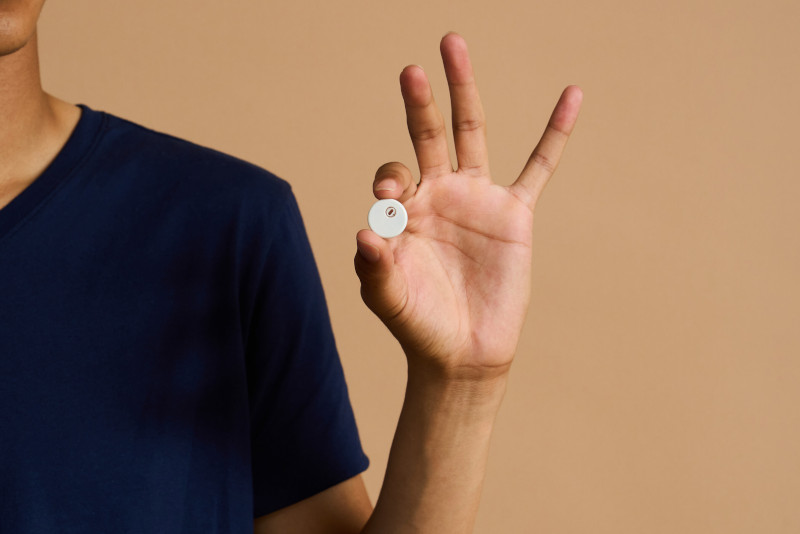
Abbott has received FDA authorization for the Libre Duo 10 Day Continuous Dual Glucose Ketone Monitoring System, the first wearable device in the United States to continuously monitor ketones and the first worldwide to continuously monitor both glucose and ketones with a single sensor.
Designed for people with diabetes ages 2 and older, Libre Duo continuously measures glucose and ketones in interstitial fluid and sends the readings to a compatible smartphone. The system can alert users when ketone levels reach a concerning threshold, potentially providing an earlier warning of diabetic ketoacidosis, or DKA.
Some of the discussion around continuous ketone monitoring before FDA authorization questioned how much practical value another continuously measured biomarker would add. Diabetes professionals interviewed about the technology, however, have pointed to an important use case: ketones can begin rising when glucose alone does not clearly signal the developing problem.
That distinction is particularly important with DKA. Ketone levels can rise quickly, sometimes while glucose remains relatively stable, and early symptoms such as nausea, fatigue, or thirst can easily be mistaken for something less serious. Until now, people who needed to check ketones generally relied on blood or urine testing that provided only a point-in-time measurement.
For most people using the system, ketone readings may remain uneventful much of the time. That does not necessarily make the measurement unimportant. The value may come precisely when the pattern changes. Seeing ketones begin to rise could give someone an opportunity to follow their diabetes care plan, investigate the cause, and take appropriate action before the situation progresses into a medical emergency.
That is also how Abbott and several diabetes experts have described the role of the second measurement. Glucose remains the primary day-to-day signal, while ketones function more like an early warning indicator when something requires attention. In one analogy used during discussion of the system, glucose was compared with a car's speedometer and ketones with the check-engine light.
FDA authorization was based on six clinical studies involving more than 600 participants ages 2 and older. According to the agency, Libre Duo tracked clinically meaningful changes in ketone levels throughout its 10-day wear period, including elevated ketone levels before the onset of DKA.
The FDA also emphasizes that ketone readings should not be interpreted in isolation. They should be considered alongside glucose readings and symptoms.
Abbott plans to launch Libre Duo 10 Day in the United States later in 2026. The company is also working on integrations with automated insulin delivery systems, beginning with Beta Bionics' iLet and Sequel Med Tech's twiist systems, with additional integrations planned for 2027.
Sources
Abbott: Abbott receives FDA authorization for world's first dual glucose-ketone sensing technology for people with diabetes
FDA: FDA Authorizes First Wearable Device That Continuously Monitors Both Ketone Levels and Blood Sugar
HCPLive: Libre Duo 10 Day Authorized as First Glucose-Ketone Monitor for Diabetes
MedTech Dive: Abbott receives FDA nod for dual-analyte sensor