
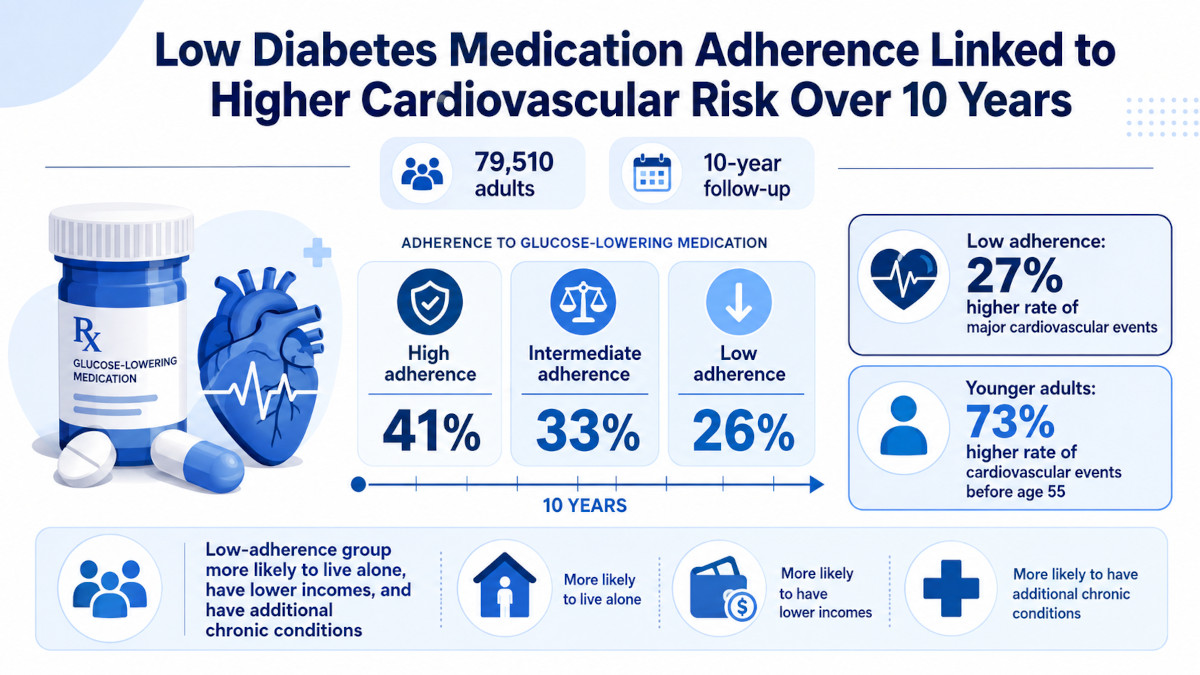
A large Danish study found that adults with newly diagnosed type 2 diabetes who had persistently low adherence to glucose-lowering medications experienced a significantly higher rate of major cardiovascular events than people who maintained high adherence.
Researchers analyzed 79,510 adults who began non-insulin glucose-lowering treatment between 2005 and 2012 and followed their prescription patterns for up to 10 years. Using monthly pharmacy dispensing records, they identified three long-term adherence patterns: 41% of participants maintained high adherence, 33% had intermediate adherence, and 26% showed an early decline followed by persistently low adherence.
Compared with the high-adherence group, people with persistently low adherence had a 27% higher rate of the composite cardiovascular outcome, which included ischemic heart disease, stroke, and heart failure. Intermediate adherence was associated with a 7% higher rate. People with high adherence also remained free of cardiovascular events for an average of 220 additional days during the 10-year period.
People in the low-adherence group were also more likely to live alone, have lower incomes, and have additional chronic conditions. These differences suggest that medication adherence may reflect broader social and health challenges rather than simply whether someone remembers to take a medication. The researchers adjusted their analyses for socioeconomic, clinical, and other factors, and the association between lower adherence and cardiovascular disease remained.
The association differed by cardiovascular outcome. Low adherence was associated with a 45% higher rate of ischemic heart disease and a 24% higher rate of stroke, while the researchers found no significant association with heart failure.
The findings were particularly notable among younger adults. Low adherence was associated with a 51% higher cardiovascular event rate among people younger than 55, while an analysis specifically examining cardiovascular events occurring before age 55 found a 73% higher rate among people with low adherence.
The researchers caution that the study was observational, so it cannot establish that poor medication adherence directly caused the cardiovascular events. Prescription dispensing was also used as a proxy for actually taking medication, and factors not captured in the registries, including glycemic control, BMI, and lifestyle behaviors, could have influenced the results. The Danish healthcare setting may also limit how broadly the results apply to other populations.
Sources
Novo Nordisk Foundation Center for Basic Metabolic Research: "Staying on diabetes medication is linked to fewer heart attacks and strokes"
Danish Broadcasting Corporation: "One in four adults doesn't take their diabetes medication regularly - and that has consequences" (Danish)