
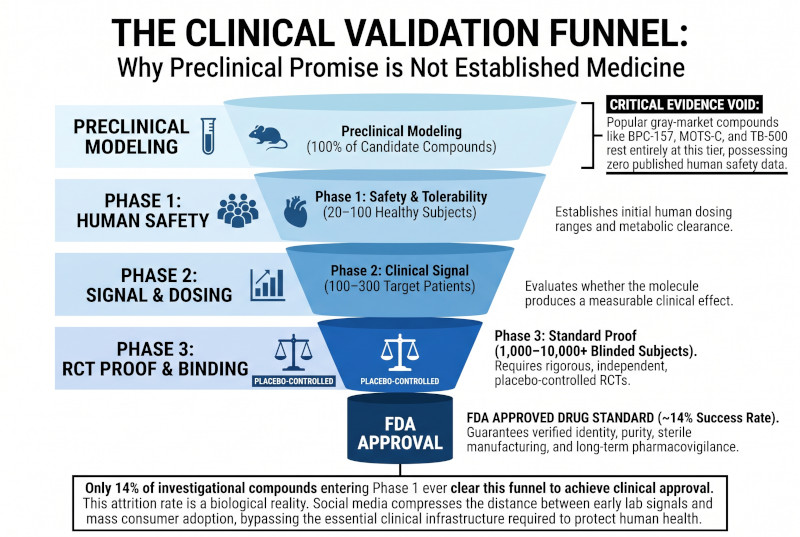
Large Clinical Validation Funnel Graphic (PDF): https://drive.google.com/file/d/1lKioUGkTtsc9Y_Z0KwtibNJUtcvrzC_K/view?usp=sharing
Summary
Peptides have become popular in wellness, fitness, longevity, and metabolic health discussions, but not all peptides belong in the same category. FDA-approved peptide medications, including insulin and GLP-1 receptor agonists, have been studied in human clinical trials, reviewed by regulators, prescribed by clinicians, and monitored after approval. Gray-market “research peptides” such as BPC-157 are different. They may be promoted online for healing, recovery, inflammation, or optimization, but they often lack strong human evidence, clear dosing, reliable safety data, product quality controls, and meaningful medical oversight. The key issue is not whether peptides are good or bad. The real issue is whether a specific peptide has enough human evidence, manufacturing quality, and clinical monitoring to support its use.
Key Points
Read more: Promising Science Is Not the Same as Proven Medicine
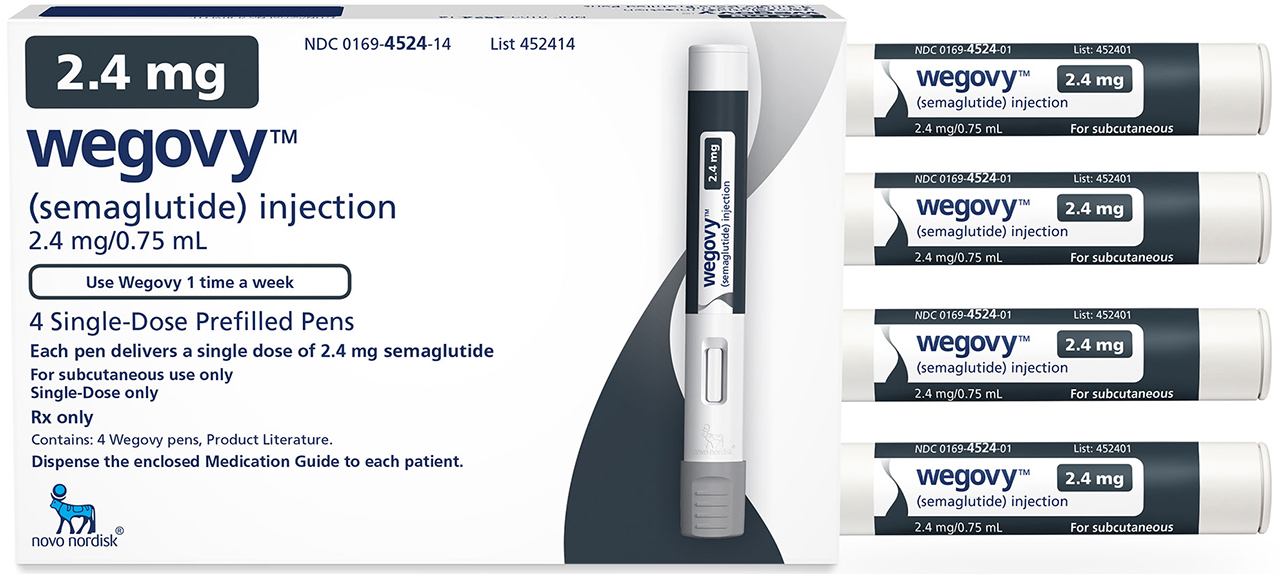
A clear look at what Novo Nordisk actually said about Wegovy and why current GLP-1 therapies are not suited for OTC use.
Abstract
Discussion about Wegovy potentially moving to over-the-counter status has grown on social media, but the reporting does not support that interpretation. The statements from Novo Nordisk’s new board chair focus on strengthening consumer-oriented strategy, not pursuing OTC approval for GLP-1 therapies. This analysis reviews what was said, how it has been misinterpreted, and why current GLP-1 medications do not meet the safety, regulatory, or clinical requirements for OTC use.
Key Points
Read more: Wegovy Will Not Go OTC: What the Sources Actually Say
Abstract
The FDA has issued a warning regarding dosing errors with compounded semaglutide injectable products, stressing significant risks for patients managing type 2 diabetes and using semaglutide for weight loss. Unlike FDA-approved versions, compounded semaglutide varies in concentration and dosing instructions, leading to potential overdoses and severe adverse effects. Clear communication and proper dosing tools are essential to ensure patient safety.
Key Points
Read more: FDA Issues Alert on Compounded Semaglutide Dosing Errors

Abstract
Novo Nordisk's Awiqli (insulin icodec) is a pioneering once-weekly basal insulin designed to enhance insulin therapy convenience and adherence for people with diabetes. Despite receiving regulatory approval in Canada and the European Union, Awiqli faces hurdles in the United States due to hypoglycemia concerns, particularly for type 1 diabetes patients.
Key Points
Read more: Regulatory Hurdles for Awiqli: Approval in Canada and EU, Concerns in the US