
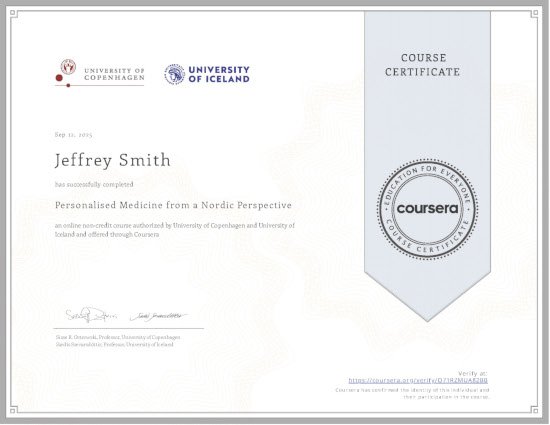
I completed Personalised Medicine from a Nordic Perspective through the University of Copenhagen and University of Iceland. The course explored how biobanks (collections of biological samples), health registries, and biomarkers (measurable health indicators) can be used to guide individual care, while also addressing risk communication, data protection, and broader ethical considerations.
People with diabetes often generate large amounts of data through continuous glucose monitors (CGMs), blood glucose meters (BGMs), and other wearables. This course highlights how similar kinds of data are used in healthcare systems to guide individual care, protect privacy, and support better outcomes. The material is presented in a way that makes these complex topics accessible to a broader audience, not just specialists.
This course was built and launched by two principal collaborators, Sisse Rye Ostrowski, MD, University of Copenhagen and Sædís Sævarsdóttir, MD, University of Iceland. They summed up its importance this way:
“The healthcare system is a wonderful place to be if you’re interested in data and developing algorithms. There are extremely complex data like omics data, register data, and data from wearables with all kinds of measurements you could possibly imagine. So, the healthcare field is the data playground of the future.” - Ostrowski
“We want people to understand the challenges involved and how collaboration and technological innovation is the key to shaping the future of healthcare.” - Sævarsdóttir
Explore the Course: Personalised Medicine from a Nordic Perspective
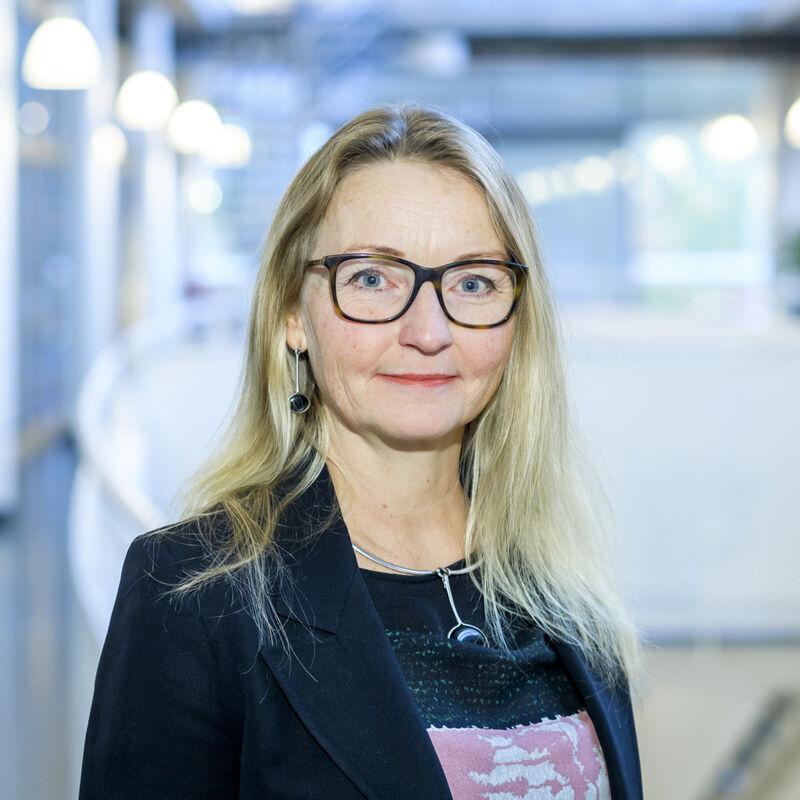
Researchers have found blood-based epigenetic markers that may help predict heart disease risk in type 2 diabetes, offering a potential path to more personalized prevention and care.
Abstract
An international research team led by Lund University Diabetes Centre has discovered blood-based epigenetic markers that may help predict which people with type 2 diabetes are at risk of serious cardiovascular events. In a study of 752 newly diagnosed participants followed for just over seven years, a scoring tool based on DNA methylation patterns outperformed standard clinical risk calculators, particularly in ruling out low-risk individuals. While further validation is needed, this approach could lead to a simple blood test that supports more personalized prevention and treatment strategies in type 2 diabetes care.
Key Points
Read more: Epigenetic Clues to Heart Risk in Type 2 Diabetes

Abstract
This post explains why I took medical courses to gain a deeper understanding of the clinical side of type 2 diabetes and obesity care. The insights gained help me better interpret the data, support public education, and present CGM and related metrics in a more informed way.
Key Points
Read more: Why I Took Medical Courses to Strengthen My Data Skills
Abstract
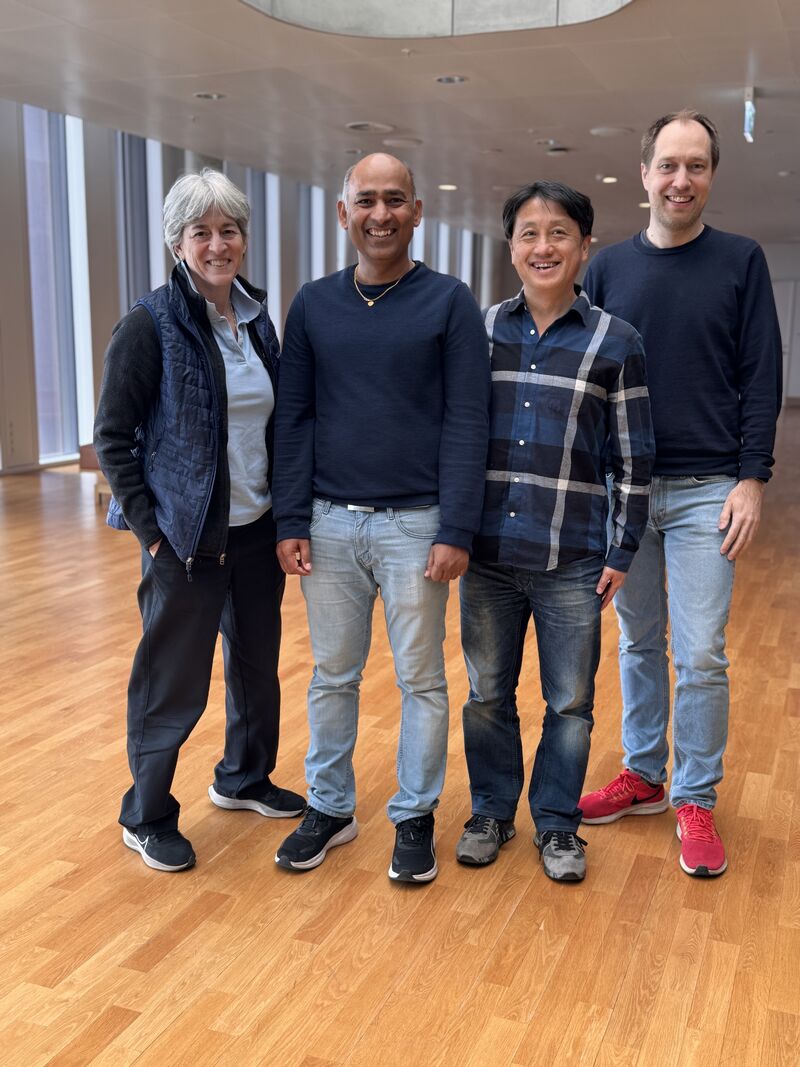
A new study led by researchers at the University of Copenhagen and Karolinska Institutet reveals that insulin resistance varies widely between individuals, even among those with the same diagnosis. By analyzing muscle tissue from over 120 people, the team uncovered unique molecular "fingerprints" that could help detect insulin resistance earlier and guide more personalized treatments for type 2 diabetes. Professor Juleen Zierath, a pioneer in exercise and metabolic research and winner of the 2024 Diabetes Prize for Excellence, played a key role in the study. The findings highlight the importance of moving beyond one-size-fits-all approaches in diabetes care.
Key Points
Read more: New Research Reveals the Hidden Complexity of Insulin Resistance