
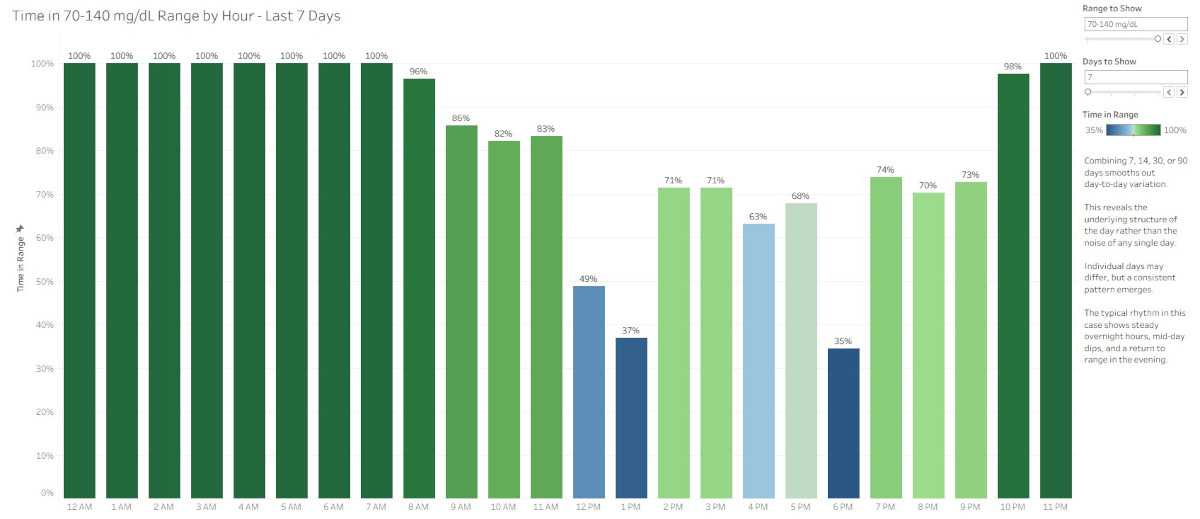
Hourly glucose visualizations shift the focus from judgment to understanding by showing when patterns occur and reducing the emotional burden of daily performance scores.
Summary
Continuous glucose monitor data is useful, but daily summary values don’t always show the full story. A single daily Time in Range percentage may show what happened overall, but it can’t show when glucose patterns occurred, whether they repeated, or how stable glucose levels were during specific parts of the day.
Time in Range by Hour and Variation by Hour offer a more detailed and emotionally neutral way to view CGM data. By shifting attention from daily scores to hourly patterns across multiple days, these visualizations help reveal timing, consistency, and recurring trends without turning the data into a judgment.
Key Points

Abstract
The American Diabetes Association’s 2025 Standards of Care reflect a growing shift toward personalized, patient-centered diabetes management. This overview translates key updates for individuals living with diabetes, emphasizing broader use of technology, smarter lifestyle guidance, integration of heart and kidney care, and increased attention to social and environmental factors. The focus is no longer just on medications, but on the full context of a person’s health and daily life.
The American Diabetes Association (ADA) released its updated Standards of Care in Diabetes for 2025 several months ago. These annual updates guide how healthcare providers deliver diabetes care across the U.S. While the standards are written for clinicians, many of the changes have a direct impact on people living with diabetes. This summary highlights what’s new and why it matters from a patient perspective.
Key Points

Abstract
Viewing type 2 diabetes as a cardiovascular disease provides a better understanding of the condition and underscores the importance of integrated care. By focusing on both metabolic and cardiovascular health, we can better manage diabetes, reduce complications, and improve the overall quality of life for patients. It’s a beneficial and effective holistic approach to managing diabetes.
Managing diabetes isn't just about controlling blood sugar levels; it's about taking care of your entire cardiovascular system. Incorporating both medication and lifestyle changes significantly reduces the risk of heart attacks, strokes, and kidney disease which helps us to live longer, healthier lives.
Key Points