
- Details
- By J. Smith
- Hits: 751

Summary
Eli Lilly’s tirzepatide has shown remarkable potential in reducing the risk of type 2 diabetes by 94% in overweight and obese adults, according to new data from the SURMOUNT-1 study. This breakthrough not only highlights tirzepatide's effectiveness in diabetes prevention but also its significant impact on weight loss.
Key Points
- 94% Risk Reduction: Tirzepatide reduces the risk of developing type 2 diabetes by 94% in adults with obesity or overweight.
- Significant Weight Loss: Participants experienced an average weight reduction of 22.9% with the highest dose.
- Dual Mechanism: Tirzepatide works by activating both GIP and GLP-1 receptors, regulating appetite and improving insulin sensitivity.
- Long-Term Study: The SURMOUNT-1 study is the longest trial of its kind, lasting 176 weeks.
- Broader Implications: This drug could reshape strategies for managing obesity and preventing type 2 diabetes on a global scale.
- Details
- By J. Smith
- Hits: 1261

Pharmaceutical leaders Eli Lilly and Novo Nordisk are making significant investments to expand their manufacturing capacities for GLP-1 drugs, which are crucial for diabetes and obesity treatments. Eli Lilly is dedicating an additional $5.3 billion to its Indiana site, aiming to address current drug shortages and enhance production of tirzepatide (marketed as Mounjaro and Zepbound). Concurrently, Novo Nordisk is investing $4.1 billion in its North Carolina facility to boost the production of injectable treatments. These efforts highlight the companies' commitment to meeting the growing global demand for these essential medications and ensuring a stable supply chain.
Key Points
- Eli Lilly's Investment: An additional $5.3 billion is being invested in the Lebanon, Indiana site to produce active pharmaceutical ingredients for tirzepatide (Mounjaro and Zepbound).
- Novo Nordisk's Expansion: A $4.1 billion investment is directed towards the Clayton, North Carolina facility to increase production of diabetes and obesity treatments.
- Economic Impact: Eli Lilly's investment will create 200 full-time jobs and over 5,000 construction jobs, contributing to economic growth in Indiana.
- Sustainable Practices: Novo Nordisk aims for LEED Gold certification for its facility, incorporating state-of-the-art technology and sustainable practices.
- Addressing Drug Shortages: Both companies are focused on alleviating current shortages and ensuring a more stable supply chain for GLP-1 drugs.
Read more: Eli Lilly and Novo Nordisk Invest in Increased Manufacturing Capacity for GLP-1 Drugs
- Details
- By J. Smith
- Hits: 557
Abstract
Eli Lilly’s tirzepatide, known as Mounjaro for type 2 diabetes and Zepbound for obesity, has shown significant efficacy in treating obstructive sleep apnea (OSA) in the SURMOUNT-OSA trial. This groundbreaking study revealed that tirzepatide not only reduces the severity of OSA but also offers substantial cardiometabolic benefits, potentially transforming the treatment landscape for this common condition.
Key Points
- Tirzepatide Efficacy: Demonstrated up to a 62.8% reduction in OSA severity in the SURMOUNT-OSA trial.
- Dual Benefits: Significant weight loss and improvements in cardiovascular markers alongside OSA treatment.
- Disease Resolution: Nearly half of the participants achieved criteria for disease resolution.
- Broader Implications: Potential FDA approval could make tirzepatide the first pharmaceutical treatment for the underlying causes of OSA.
- GLP-1 Drug Expansion: Highlights the expanding therapeutic scope of GLP-1 drugs, following Wegovy’s label expansion to include cardiovascular risk reduction.
Read more: Tirzepatide’s Efficacy in Treating Obstructive Sleep Apnea
- Details
- By J. Smith
- Hits: 735
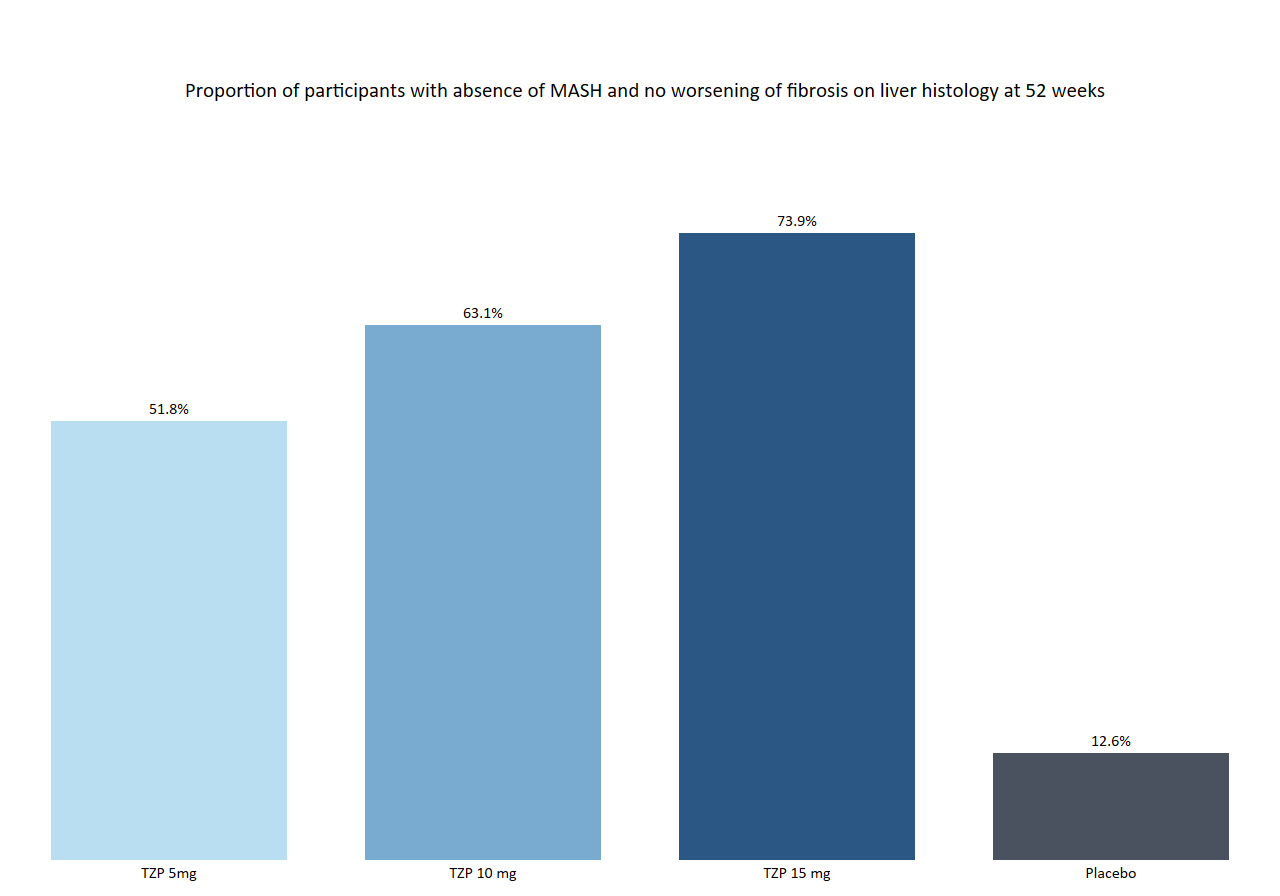
Abstract
Eli Lilly’s SYNERGY-NASH study has revealed promising results for tirzepatide in treating metabolic dysfunction-associated steatohepatitis (MASH) with stage 2 or 3 fibrosis. This development could significantly benefit individuals managing both MASH and type 2 diabetes, offering a dual approach to improve liver and metabolic health. Read on to learn more about this groundbreaking study and its potential implications for diabetes care.
Key Point
Eli Lilly’s tirzepatide shows potential as a groundbreaking treatment for MASH, significantly improving liver health and offering new hope for those with type 2 diabetes.
Read more: Eli Lilly’s Tirzepatide Shows Promising Results in MASH Treatment
- Details
- By J. Smith
- Hits: 403

Eli Lilly's recent announcement about the promising results of the SURMOUNT-OSA phase 3 clinical trials for tirzepatide marks a significant milestone in the treatment of obstructive sleep apnea (OSA) and obesity. This development could potentially reshape the landscape of OSA treatment, much like the recent label expansion of Wegovy for cardiovascular disease management.
The Breakthrough with Tirzepatide
Tirzepatide, already known for its efficacy in managing type 2 diabetes under the brand name Mounjaro and chronic weight management under the brand names Zepbound, has shown remarkable results in the SURMOUNT-OSA trials. The drug achieved a mean apnea-hypopnea index (AHI) reduction of up to 63%, significantly lowering the number of times a person's breathing is restricted or completely blocked during sleep.
The trials involved two distinct groups: those not using positive airway pressure (PAP) therapy and those continuing with PAP therapy. In both scenarios, tirzepatide outperformed the placebo, demonstrating substantial improvements not only in AHI but also in body weight reduction, key factors in managing OSA.
Comparing Tirzepatide and Wegovy's Label Expansions
The potential label expansion for tirzepatide to include treatment for OSA can be seen as parallel to the recent FDA approval for Wegovy, a medication by Novo Nordisk, for use in managing cardiovascular disease alongside obesity. Both cases represent significant steps forward in utilizing diabetes and obesity medications for broader therapeutic purposes, addressing complex clusters of metabolic conditions with a single treatment.
The Impact of Tirzepatide on OSA Management
OSA is a prevalent condition affecting millions worldwide, with a significant number of cases remaining undiagnosed. The condition is not only a discomfort in terms of disrupted sleep but also poses serious health risks, including cardiovascular diseases, type 2 diabetes, and strokes. Current treatments primarily focus on symptom management rather than addressing the underlying causes. Tirzepatide’s mechanism of action offers a dual benefit—managing body weight and directly reducing AHI, which could address the root cause of OSA in obese patients.
Regulatory and Commercial Prospects
Eli Lilly plans to submit the data from the SURMOUNT-OSA trials for global regulatory reviews, aiming for a label expansion that could make tirzepatide the first pharmaceutical treatment targeting the underlying causes of OSA. This move, expected to begin mid-year, follows the FDA's Fast Track designation for the drug, highlighting the urgent need for innovative treatments in this area.
Summary
The journey of tirzepatide from a treatment for diabetes and obesity to potentially the first treatment for the underlying causes of OSA highlights the evolving understanding and management of interlinked metabolic disorders. If approved, this label expansion could not only enhance the quality of life for millions suffering from OSA but also reduce the long-term health complications associated with the condition. As we await regulatory decisions, the healthcare community remains optimistic about the broader implications of such treatments in managing complex health issues in a more holistic manner.
Frequently Asked Questions
What is the exact mechanism of action of tirzepatide in reducing the severity of obstructive sleep apnea?
Tirzepatide works by targeting the GLP-1 and GIP receptors, which not only aids in weight loss but may also impact respiratory physiology, though the specific mechanisms related to OSA reduction require further study.
How does tirzepatide compare to other treatments currently available for OSA in terms of effectiveness and side effects?
Tirzepatide has shown significant reductions in AHI and weight, potentially offering a dual approach to OSA treatment compared to traditional therapies like CPAP, which do not address underlying obesity.
How soon after starting treatment with tirzepatide can patients expect to see improvements in their OSA symptoms?
Improvements in AHI were observed over a 52-week period in the trials, suggesting a gradual improvement in symptoms over this duration.
More Articles …
- The Mounjaro Supply Challenges: Looking Back and Looking Forward
- Acquired Podcast: The Scientific Journey Behind Ozempic
- Tirzepatide and the Future of Incretin Therapies: A New Horizon in Obesity Treatment
- Promising Phase 2 Results: Eli Lilly's Tirzepatide Shows Potential Beyond Diabetes and Obesity
Page 1 of 2