
- Details
- By J. Smith
- Hits: 312
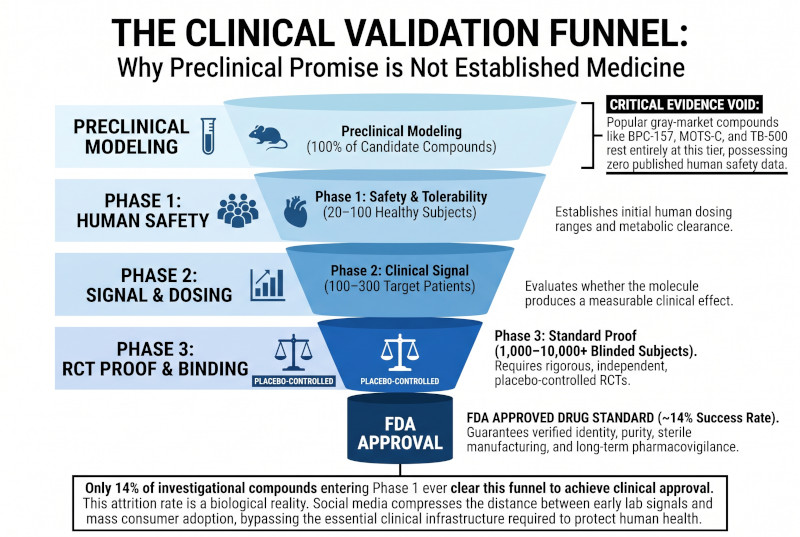
Large Clinical Validation Funnel Graphic (PDF): https://drive.google.com/file/d/1lKioUGkTtsc9Y_Z0KwtibNJUtcvrzC_K/view?usp=sharing
Summary
Peptides have become popular in wellness, fitness, longevity, and metabolic health discussions, but not all peptides belong in the same category. FDA-approved peptide medications, including insulin and GLP-1 receptor agonists, have been studied in human clinical trials, reviewed by regulators, prescribed by clinicians, and monitored after approval. Gray-market “research peptides” such as BPC-157 are different. They may be promoted online for healing, recovery, inflammation, or optimization, but they often lack strong human evidence, clear dosing, reliable safety data, product quality controls, and meaningful medical oversight. The key issue is not whether peptides are good or bad. The real issue is whether a specific peptide has enough human evidence, manufacturing quality, and clinical monitoring to support its use.
Key Points
- Approved peptide medications and gray-market peptides are not the same.
Insulin and GLP-1 medications have clinical trial data, regulatory review, professional prescribing, and post-approval monitoring. Gray-market peptides may not have the same evidence or safeguards. - Known risks are different from unknown risks.
Approved medications may have visible side effects because they have been studied and labeled. Unapproved products may appear safer simply because they have fewer studies, weaker monitoring, and less reporting. - BPC-157 claims go beyond the available human evidence.
BPC-157 is often promoted for recovery, healing, inflammation, and optimization, but the post notes that it has a very small published human evidence base, no completed randomized controlled trials, no FDA approval, and a canceled Phase 1 trial that was never published. - Injection raises the stakes.
Injectable peptides bypass the digestive system and may enter systemic circulation intact, creating important questions about dosing, absorption, half-life, receptor effects, off-target effects, and long-term safety. - This is partly a trust problem.
People may trust social media stories, wellness clinics, influencers, or “optimization” messaging more than approved medications because those messages feel personal and empowering. But moving trust from regulated medicine to social media wellness marketing can mean moving into a system with fewer safeguards and less transparency.
Read more: Promising Science Is Not the Same as Proven Medicine
- Details
- By J. Smith
- Hits: 555
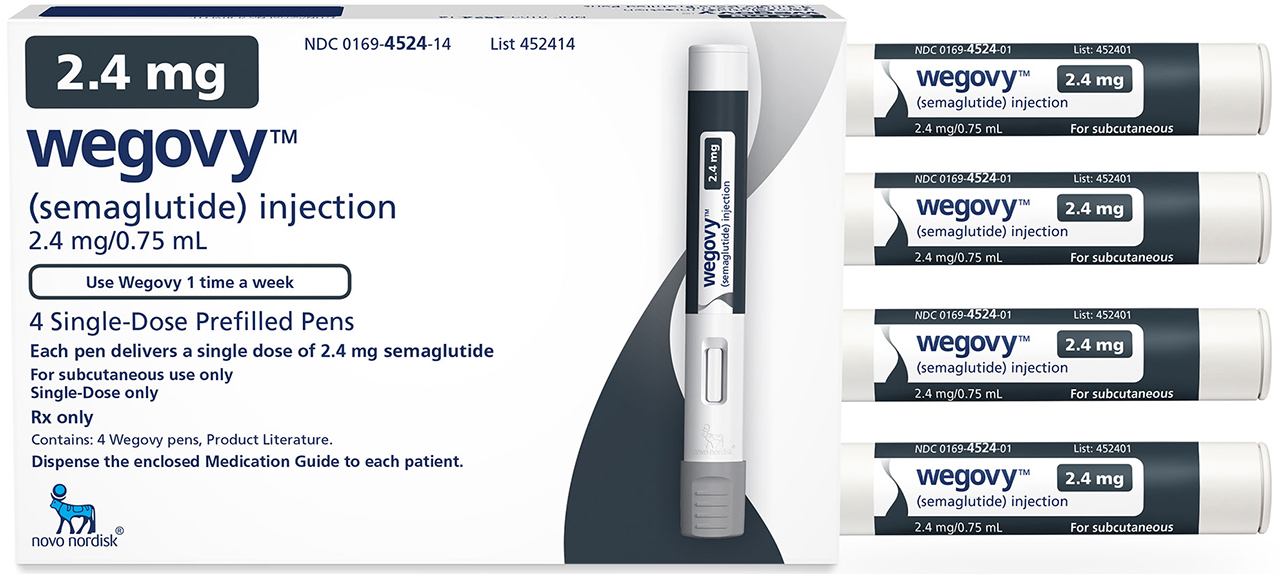
A clear look at what Novo Nordisk actually said about Wegovy and why current GLP-1 therapies are not suited for OTC use.
Abstract
Discussion about Wegovy potentially moving to over-the-counter status has grown on social media, but the reporting does not support that interpretation. The statements from Novo Nordisk’s new board chair focus on strengthening consumer-oriented strategy, not pursuing OTC approval for GLP-1 therapies. This analysis reviews what was said, how it has been misinterpreted, and why current GLP-1 medications do not meet the safety, regulatory, or clinical requirements for OTC use.
Key Points
- Official statements addressed board expertise, not an OTC pathway.
The new chair emphasized interest in board members with OTC experience to support direct-to-consumer models, not to convert Wegovy to OTC status. - Social media amplified a speculative remark into an “inevitable” outcome.
The reporting shows no regulatory plan, timeline, or active effort to make Wegovy an OTC product. - Current GLP-1 therapies cannot meet OTC safety standards.
Injectable formulations require refrigeration, and both injectable and oral versions rely on mandatory dose escalation to manage side effects. - Unsupervised initiation poses clear clinical risks.
Starting at a high dose without medical guidance increases the likelihood of severe nausea, dehydration, and other adverse events requiring medical attention. - GLP-1 medications treat chronic conditions requiring ongoing monitoring.
Regulators expect screening and follow-up for this class, which creates built-in barriers to OTC approval.
Read more: Wegovy Will Not Go OTC: What the Sources Actually Say
- Details
- By J. Smith
- Hits: 783
Abstract
The FDA has issued a warning regarding dosing errors with compounded semaglutide injectable products, stressing significant risks for patients managing type 2 diabetes and using semaglutide for weight loss. Unlike FDA-approved versions, compounded semaglutide varies in concentration and dosing instructions, leading to potential overdoses and severe adverse effects. Clear communication and proper dosing tools are essential to ensure patient safety.
Key Points
- FDA Warning: Alert on dosing errors with compounded semaglutide, noting overdoses and severe side effects.
- FDA-Approved vs. Compounded: Compounded versions vary in concentration and instructions, unlike standardized FDA-approved products.
- Common Errors: Misunderstandings in measurement units and inappropriate syringe use lead to significant overdoses.
- Case Examples: Patients and providers often miscalculate doses, resulting in severe adverse effects.
- Recommendations: Emphasize clear communication, proper dosing tools, and double-checking calculations.
- Summary: Use FDA-approved products and consult healthcare professionals to avoid risks. Report adverse effects to FDA’s MedWatch.
Read more: FDA Issues Alert on Compounded Semaglutide Dosing Errors
- Details
- By J. Smith
- Hits: 966

Abstract
Novo Nordisk's Awiqli (insulin icodec) is a pioneering once-weekly basal insulin designed to enhance insulin therapy convenience and adherence for people with diabetes. Despite receiving regulatory approval in Canada and the European Union, Awiqli faces hurdles in the United States due to hypoglycemia concerns, particularly for type 1 diabetes patients.
Key Points
- Awiqli Overview: Awiqli is a once-weekly basal insulin developed by Novo Nordisk, aimed at improving glycemic control in diabetes patients.
- Canadian Approval: Health Canada approved Awiqli in March 2024, making it the first once-weekly basal insulin available in the country.
- EU Approval: The European Medicines Agency granted marketing authorization for Awiqli on May 17, 2024, based on its efficacy and safety in clinical trials.
- FDA Concerns: The U.S. FDA has yet to approve Awiqli due to concerns about increased hypoglycemia risk in type 1 diabetes patients.
- Hypoglycemia Risks: Clinical trials indicated higher rates of severe hypoglycemic events in patients using Awiqli compared to daily basal insulins.
- Risk Mitigation Strategies: Novo Nordisk proposed using Awiqli with continuous glucose monitoring and excluding patients with a history of severe hypoglycemia.
- More Data Needed: While Awiqli shows promise for improving diabetes management, further data is needed to address safety concerns for U.S. approval.
Read more: Regulatory Hurdles for Awiqli: Approval in Canada and EU, Concerns in the US
- Details
- By J. Smith
- Hits: 391
 Recently, the conversation around GLP-1 receptor agonists, popularly known for their effectiveness in managing diabetes and aiding weight loss, took a concerning turn with reports suggesting a potential link to suicidal thoughts and actions. This sparked a series of investigations by regulatory bodies around the world, including the European Medicines Agency (EMA) and the U.S. Food and Drug Administration (FDA), to thoroughly review the matter. The findings from these investigations have provided much-needed clarity and reassurance to patients and healthcare providers alike.
The Investigation and Its Findings
The EMA initiated a nine-month probe into the class of drugs known as GLP-1 receptor agonists, which include widely used medications such as Ozempic, Wegovy, and others containing the active ingredients semaglutide or liraglutide. This investigation was triggered by anecdotal reports from Iceland, which flagged concerns over patients experiencing suicidal thoughts or self-harm after using these medications. The FDA also conducted a preliminary review, echoing the need for a thorough investigation into these claims.
After a complete review of clinical trials, post-marketing data, and other relevant studies, both the EMA and FDA concluded that there is no evidence to support a causal link between GLP-1 receptor agonists and an increased risk of suicidal thoughts or actions. This conclusion was drawn from analyzing a large body of evidence, including a significant U.S. study that found patients taking semaglutide had a lower risk of suicidal thoughts compared to those on older medications for treating diabetes and obesity.
Implications for Patients and Healthcare Providers
The findings are a huge relief for millions of patients worldwide who rely on GLP-1 receptor agonists for managing diabetes and obesity and underscore the importance of evidence-based evaluation in addressing concerns related to medication safety. Patients taking GLP-1 receptor agonists are encouraged to continue their treatment as prescribed and report any mental health or other concerns to their healthcare providers.
Healthcare providers are also reassured by these findings, allowing them to continue prescribing these medications with confidence in their safety profile. It is still important, however, for healthcare professionals to remain vigilant and monitor patients for any adverse effects, as is standard practice with all medications.
Moving Forward
While the investigations have ruled out a link between GLP-1 drugs and suicidal thoughts, both the EMA and FDA have committed to continuing their monitoring of reports related to these medications. This ongoing vigilance ensures that any new evidence or concerns that may arise can be promptly addressed, maintaining the highest standards of patient safety.
For patients and healthcare providers, the conclusion of these investigations is a positive development, affirming the safety of GLP-1 receptor agonists. As with all medications, open communication between patients and their healthcare team is essential to managing health conditions effectively and safely.
The thorough investigations by the EMA and FDA have provided clarity on the safety of GLP-1 receptor agonists, allowing patients and healthcare providers to continue their use with confidence. The commitment to ongoing monitoring by regulatory bodies further ensures that patient safety remains a top priority in the management of diabetes and obesity.
Frequently Asked Questions
How long do patients typically need to be on GLP-1 receptor agonists like Ozempic or Wegovy before seeing significant weight loss or diabetes management benefits?
Significant weight loss or diabetes management benefits from GLP-1 receptor agonists typically become evident within a few weeks to months of treatment, but individual results may vary.
How do GLP-1 receptor agonists compare in effectiveness and safety to other classes of diabetes and weight-loss medications?
GLP-1 receptor agonists are generally considered more effective and have a safer profile compared to older diabetes and weight-loss medications, but individual responses can differ.
What are the long-term effects of using GLP-1 receptor agonists on overall health and metabolism?
Long-term effects of using GLP-1 receptor agonists are still being studied, but they are generally associated with sustained weight loss and improved glycemic control.
Can GLP-1 receptor agonists be used in combination with other medications for diabetes or weight loss, and if so, what are the recommended combinations?
GLP-1 receptor agonists can be used in combination with other medications, but the combinations should be individualized based on the patient's health status and under the guidance of a healthcare provider.
How does the cost of GLP-1 receptor agonists compare to other diabetes and weight-loss treatments?
The cost of GLP-1 receptor agonists can be higher than other diabetes and weight-loss treatments, but insurance coverage and patient assistance programs may help mitigate these costs.
More Articles …
Page 1 of 2