
- Details
- By J. Smith
- Hits: 764
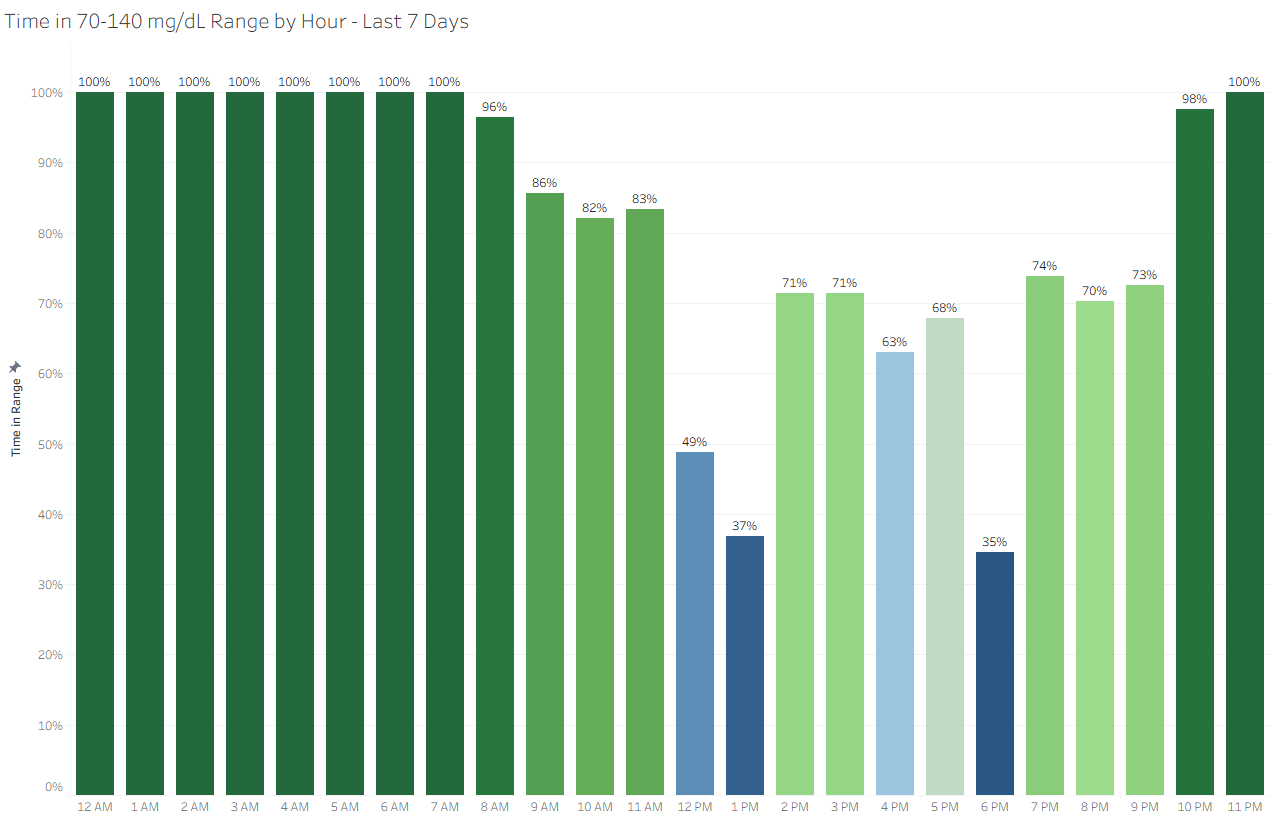
Hourly glucose visualizations shift attention from a daily score to time-of-day patterns. They are designed to support understanding and may reduce the evaluative feel of daily performance numbers.2,4
Summary
Continuous glucose monitor data is useful, but daily summary values don’t always show the full story. A single daily Time in Range percentage may show what happened overall, but it can’t show when glucose patterns occurred, whether they repeated, or how stable glucose levels were during specific parts of the day.
Time in Range by Hour and Variation by Hour offer a more detailed and less evaluative way to view CGM data. By shifting attention from daily scores to hourly patterns across multiple days, these visualizations help reveal timing, consistency, and recurring trends without turning the data into a judgment.
Key Points
- Daily Time in Range values are useful, but they don’t show when glucose patterns occur.
- A single daily percentage can feel like a score, even when it’s meant only as a summary.
- Hourly views add time-of-day context that daily summaries miss.
- Variation by Hour shows whether glucose levels are stable or more variable during those same periods.
- Multi-day hourly views help separate recurring patterns from isolated events.
- These visualizations are intended to support understanding, not replace standard CGM reports or clinical guidance.
- Details
- By J. Smith
- Hits: 572

Abstract
The American Diabetes Association’s 2025 Standards of Care reflect a growing shift toward personalized, patient-centered diabetes management. This overview translates key updates for individuals living with diabetes, emphasizing broader use of technology, smarter lifestyle guidance, integration of heart and kidney care, and increased attention to social and environmental factors. The focus is no longer just on medications, but on the full context of a person’s health and daily life.
The American Diabetes Association (ADA) released its updated Standards of Care in Diabetes for 2025 several months ago. These annual updates guide how healthcare providers deliver diabetes care across the U.S. While the standards are written for clinicians, many of the changes have a direct impact on people living with diabetes. This summary highlights what’s new and why it matters from a patient perspective.
Key Points
- More personalized care plans – New guidelines support tailoring diabetes treatment based on individual needs, not just type 1 or type 2 labels.
- Broader access to CGM technology – Continuous glucose monitors are now recommended for more people, including some with type 2 diabetes not on insulin.
- Lifestyle advice goes beyond diet and exercise – Sleep quality, muscle maintenance, and hydration are emphasized alongside plant-based nutrition.
- Support beyond medication – Social factors like affordability and access to care are now officially part of diabetes treatment planning.
- Integrated heart, kidney, and liver care – Screening and treatment are becoming more coordinated to protect long-term health.
- Details
- By J. Smith
- Hits: 402

Abstract
Viewing type 2 diabetes as a cardiovascular disease provides a better understanding of the condition and underscores the importance of integrated care. By focusing on both metabolic and cardiovascular health, we can better manage diabetes, reduce complications, and improve the overall quality of life for patients. It’s a beneficial and effective holistic approach to managing diabetes.
Managing diabetes isn't just about controlling blood sugar levels; it's about taking care of your entire cardiovascular system. Incorporating both medication and lifestyle changes significantly reduces the risk of heart attacks, strokes, and kidney disease which helps us to live longer, healthier lives.
Key Points
- Vascular Nature of Type 2 Diabetes: Understanding how type 2 diabetes is linked to vascular health.
- Impact on Blood Vessels: Insights into how diabetes affects blood vessels and overall cardiovascular health.
- Management Strategies: Effective strategies for managing diabetes with a focus on vascular health.
- Details
- By J. Smith
- Hits: 429
In a significant development for the diabetes community, particularly those living with type 2 diabetes, Novo Nordisk's Awiqli® (once-weekly basal insulin icodec) has been recommended for approval by the European Medicines Agency's Committee for Medicinal Products for Human Use (CHMP). This recommendation marks a pivotal moment in diabetes care, offering a new and potentially transformative approach to managing this chronic condition.
Transforming Diabetes Treatment with Awiqli®
Awiqli® is not just another insulin product; it represents a leap forward in diabetes management. Designed to cover basal insulin requirements for a full week with a single subcutaneous injection, Awiqli® aims to simplify the lives of those living with diabetes. The ONWARDS phase 3a clinical trial program, which served as the basis for CHMP's positive opinion, demonstrated that Awiqli® achieved superior blood sugar reduction and Time in Range compared to daily basal insulin in people with type 2 diabetes. This is particularly noteworthy for individuals who have not previously been treated with insulin, where the overall observed rates of clinically significant or severe hypoglycemia were below one event per patient-year of exposure with both Awiqli® and comparators.
A Significant Impact on Treatment Adherence
One of the most promising aspects of Awiqli® is its potential to improve treatment adherence. The convenience of a once-weekly injection cannot be overstated, especially when compared to the daily injections required by traditional basal insulins such as insulin glargine U100. In clinical trials, patients taking Awiqli® weekly demonstrated better glycemic control and adherence to treatment than those on daily injections. This improvement in adherence is crucial, as it directly correlates with better long-term health outcomes for individuals with diabetes.
Looking Ahead: FDA Approval and What It Means for the US
While Awiqli® is on the cusp of receiving marketing authorization in Europe, anticipation is building for its approval in the United States. Expected later this year, FDA approval of Awiqli® would be a boon for the millions of Americans living with type 2 diabetes, particularly those who are currently managing their condition with basal insulin. The introduction of Awiqli® into the US market could significantly ease the daily burden of diabetes management, offering a more flexible and less intrusive treatment option.
Summary
The recommendation for approval of Awiqli® by European regulatory authorities is great news for the diabetes community. It underscores the ongoing innovation in diabetes treatment and the commitment to improving the quality of life for those affected by this chronic disease. As we await FDA approval in the United States, the potential impact of Awiqli® on diabetes care is immense, promising a new era of convenience, adherence, and control for people living with diabetes.
Frequently Asked Questions
How does once-weekly basal insulin icodec compare in cost to daily basal insulins currently on the market?
Novo Nordisk may offer patient assistance programs to help manage costs, and the final pricing will likely be influenced by various factors including insurance coverage and regional pricing strategies.
Can once-weekly basal insulin icodec be used in conjunction with oral diabetes medications or other injectable therapies?
While the press release does not explicitly address the compatibility of once-weekly basal insulin icodec with other diabetes medications, it is common for basal insulins to be used alongside oral diabetes medications or other injectable therapies as part of a comprehensive diabetes management plan. Patients should consult with their healthcare provider for personalized advice.
What are the potential side effects of once-weekly basal insulin icodec, and how do they compare to those of daily basal insulins?
Once-weekly basal insulin icodec appeared to have a safe and well-tolerated profile across the ONWARDS clinical trial program. In people with type 2 diabetes, the overall observed rates of clinically significant or severe hypoglycemia were below one event per patient-year of exposure, similar to comparators. In people with type 1 diabetes, there was a statistically significant higher estimated rate of severe or clinically significant hypoglycemia compared with insulin degludec. This suggests that while the side effect profile is generally favorable, there may be differences in the risk of hypoglycemia compared to some daily basal insulins.
- Details
- By J. Smith
- Hits: 536
The American Diabetes Association (ADA) has once again set the bar high with its 2024 Standards of Care in Diabetes. While the changes might seem subtle, they carry profound implications for the management of type 2 diabetes and obesity. Dr. Robert Gabbay, Dr. Dennis Bruemmer, and Dr. Anne Peters have provided valuable insights into these updates, emphasizing the importance of personalized care, advancements in diabetes technology, and a holistic approach to patient health.
Embracing Personalized Diabetes Management
A pivotal shift in the 2024 Standards of Care is the emphasis on personalized diabetes management. This approach is beautifully encapsulated in the reordering of terms from "Classification and Diagnosis of Diabetes" to "Diagnosis and Classification of Diabetes." Dr. Peters highlights the significance of this change, advocating for a diagnostic process that first confirms the presence of diabetes before attempting to classify its type. This nuanced approach acknowledges that diabetes is not the same for every patient, moving away from traditional categorizations towards a more individualized understanding.
The Role of Diabetes Technology
The ADA's 2024 updates spotlight the critical role of diabetes technology in improving patient outcomes. Dr. Peters underscores the ADA's endorsement of continuous glucose monitors (CGMs) and automated insulin delivery systems for all adults with type 1 diabetes, even at diagnosis. This recommendation reflects the growing evidence supporting the benefits of these technologies in managing diabetes more effectively and improving quality of life.
The ADA also encourages healthcare providers to develop competencies in diabetes technology. This initiative aims to bridge the gap between the potential of technological solutions and their practical application, ensuring that patients can fully benefit from these innovations.
Beyond BMI: A Comprehensive Approach to Weight Management
The 2024 Standards of Care place a greater emphasis on weight management in treating type 2 diabetes, advocating for a holistic approach that goes beyond mere BMI measurements. Dr. Peters supports the integration of lifestyle changes with new pharmacotherapies that address overweight and obesity, highlighting the importance of considering other metrics such as waist circumference, waist-to-hip ratio, and waist-to-height ratios. This approach aims to provide a more accurate assessment of a patient's health status and progress, recognizing that weight loss can affect both fat and lean body mass.
A Triad of Goals: Weight Management, Glycemic Control, and Cardiorenal Risk Reduction
The treatment algorithm for managing type 2 diabetes has been refined to focus on three primary goals: weight management, glycemic control, and cardiorenal risk reduction. This triad underscores the interconnected nature of these aspects in diabetes care. Dr. Peters emphasizes the need for individualized treatment plans tailored to each patient's unique circumstances, including their access to resources and personal preferences. The guidelines advocate for early combination therapy in adults with type 2 diabetes to expedite the achievement of individualized treatment targets, highlighting the ADA's proactive stance on managing the disease.
Summary
The 2024 ADA Standards of Care in Diabetes introduce subtle yet significant changes that reflect a deeper understanding of diabetes and its management. By prioritizing accurate diagnosis, comprehensive weight management, and a holistic approach to treatment goals, the ADA continues to advance the care of individuals with diabetes. These updates, expertly analyzed by Drs. Gabbay, Bruemmer, and Peters, offer valuable insights for healthcare providers, patients, and the broader diabetes community, emphasizing the importance of personalized, patient-centered care. As we navigate these updates, it's crucial for individuals with type 2 diabetes and obesity to engage in discussions with their healthcare providers about how these changes can be integrated into their care plans, paving the way for improved health outcomes and quality of life.
Dr. Anne Peters serves as a professor of medicine at the University of Southern California (USC) Keck School of Medicine and is the director of the USC clinical diabetes programs. She has made substantial contributions to diabetes research and education, authoring over 200 articles, reviews, abstracts, and three books, in addition to participating as an investigator in more than 40 research studies. Dr. Peters is highly regarded internationally, speaking at over 400 programs, and actively serving on committees of several professional organizations.
Dr. Robert Gabbay is the Chief Scientific and Medical Officer at the American Diabetes Association. With a rich background in diabetes care and research, he has dedicated his career to improving the lives of those affected by diabetes. Dr. Gabbay's work focuses on innovative care models that enhance patient outcomes and experiences. He is also an Associate Professor at Harvard Medical School, where he contributes to the future of medical education and research in diabetes.
Dr. Dennis Bruemmer serves as a staff cardiologist and the Director of the Center for Cardiometabolic Health at the Cleveland Clinic. With dual board certification in Cardiology and Endocrinology, Dr. Bruemmer's expertise lies at the intersection of cardiovascular disease and diabetes. His work emphasizes preventive cardiology, aiming to address the complex needs of patients with cardiometabolic conditions. Dr. Bruemmer is also a Professor of Medicine at the Cleveland Clinic Lerner School of Medicine at Case Western Reserve University.
Presentations
'Subtle Changes' to the 2024 ADA Standards of Care in Diabetes
https://youtu.be/L3G4KGYmh2Q?si=cw2Jzs1bXRDe8X7Y
Anne Peters, MD, provides an overview of the updates to the ADA Standards of Care in Diabetes.
'Real Progress' in Recommendations for Treating Type 2 Diabetes
https://youtu.be/lQbzHoZINuo?si=U6Ku_frZ5qS4aE41
The ADA Standards of Care in Diabetes–2024 makes progress in managing type 2 diabetes, but Dr Anne Peters ponders whether it's fast enough.
The American Diabetes Association’s Standards of Care in Diabetes—2024
https://youtu.be/3WGAt_ZULEk?si=uOMci6o8qzk9vusL
Watch the Know Diabetes by Heart™ presentation on the Standards of Care in Diabetes—2024 (Standards of Care) from the American Diabetes Association® (ADA). Dennis Bruemmer, MD, PhD, highlights important updates to this year’s Standards of Care and how those changes impact clinical care, especially as they relate to type 2 diabetes, cardiovascular disease (CVD), and chronic kidney disease (CKD).
Frequently Asked Questions
How does the ADA suggest addressing the psychological impact of diabetes on patients in the new standards?
To address the psychological impact of diabetes, the ADA specifies annual screening for diabetes distress and depression, and provides a toolkit for healthcare providers to support patients with psychosocial health issues, including anxiety and barriers to insulin use.
What specific criteria does the ADA recommend for selecting patients for advanced diabetes management technologies?
The ADA recommends offering diabetes devices to all individuals with diabetes, emphasizing the need for healthcare providers to establish technology-based competencies and to individualize the use of technology based on the patient's treatment regimen, circumstances, preference, and needs.
How do the new standards address disparities in diabetes care among different populations?
While disparities in diabetes care among different populations are not directly addressed, the emphasis on personalized care and the use of technology may indirectly contribute to addressing these disparities by tailoring treatment to individual needs.