
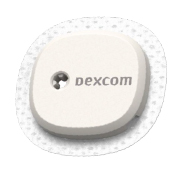
Dexcom announced its next-generation continuous glucose monitor, the G8, during its 2026 Investor Day presentation. The new sensor is expected to be 50% smaller than the G7 and includes updated sensor electronics, a new silicon chip, and algorithm improvements designed to improve glucose performance.
What stands out most is Dexcom’s focus on adaptive sensing. The G8 is designed to adjust during use, adapting to each person’s physiology over time. Dexcom says clinical testing has shown improved accuracy, greater consistency, fewer outlier readings, and a reduction in Mean Absolute Relative Difference (MARD), a common measure used to evaluate CGM accuracy.
For people living with diabetes, the potential benefit is practical. A smaller sensor may be easier to wear, while better accuracy and fewer outlier readings could make CGM data easier to trust when making day-to-day decisions about food, activity, medication timing, and glucose patterns.
Dexcom also said the G8 platform will support future development beyond glucose monitoring, including ketone measurement. However, ketone sensing is not expected at launch, and Dexcom has not provided a specific timeline for that feature.
The G8 is expected to be submitted to the FDA in 2027, with a possible launch in late 2027 or early 2028, depending on regulatory timing.
Why This Matters
The G8 looks like more than a size reduction. Dexcom appears to be building a new CGM platform focused on accuracy, reliability, and personalization. The idea of a sensor that adapts to each user is especially interesting because CGM performance can vary from person to person and over the life of a sensor.
A smaller sensor with fewer outliers and better day-to-day reliability would be exactly the kind of improvement users notice quickly.
Sources
Dexcom 2026 Investor Day Presentation (PDF)
Drug Delivery Business: Dexcom unveils next-gen G8 CGM system, CEO Jake Leach explains new tech
MedTech Dive: Dexcom raises sales expectations, discusses G8 plans