
GLP-1 receptor agonists are a type of medication used to manage blood sugar levels in people with type 2 diabetes. They work by stimulating insulin production and slowing down gastric emptying. Certain foods can interfere with the effectiveness of these medications or cause unpleasant side effects. Here are some foods to avoid and healthier alternatives to consider when taking GLP-1 medications.
Foods to Avoid
Healthy Alternatives
Remember, it's important to listen to your body and eat slowly, stop eating when you feel full, and stay hydrated. If you have any questions or concerns, always consult with your healthcare provider or a dietitian.
GLP-1 Myth vs. Fact
Myth 1: GLP-1 Medications Are Only for People with Diabetes
Fact: While GLP-1 medications were initially approved for managing type 2 diabetes, they are also effective for weight loss in individuals without diabetes. These medications work by mimicking the natural GLP-1 hormone, which helps regulate blood sugar and appetite, making them beneficial for a broader range of patients. Luraglutide (Victoza and Saxenda), semaglutide (Ozempic and Wegovy), and tirzepatide (Mounjaro and Zepbound) are currently FDA approved for type 2 diabetes and for weight management.
Myth 2: GLP-1 Medications Guarantee Long-Term Weight Loss Without Other Lifestyle Changes
Fact: GLP-1 medications can significantly aid in weight loss; however, their effectiveness is greatly enhanced when combined with lifestyle changes such as diet and exercise. Sustainable weight loss involves a comprehensive approach, including behavioral changes and possibly other medical interventions.
Myth 3: GLP-1 Medications Have No Side Effects
Fact: While GLP-1 medications are generally safe, they can cause side effects such as nausea, diarrhea, and constipation. It’s important for users to be aware of these potential effects and consult healthcare providers for management strategies. Side effects tend to be temporary and may decrease over time.
Frequently Asked Questions
How long does it typically take to see changes in blood sugar levels after starting GLP-1 medications?
The effect of GLP-1 medications on blood sugar levels can typically be seen within a few weeks of starting the treatment.
What are the long-term benefits of using GLP-1 medications for diabetes management?
Long-term use of GLP-1 medications can improve blood sugar control and reduce the risk of cardiovascular complications.
Can lifestyle changes alone replace the need for GLP-1 medications in some cases?
In some cases, substantial lifestyle changes may reduce the dependency on medications, but this should be carefully managed by a healthcare professional.
How does alcohol consumption affect the efficacy of GLP-1 medications?
Alcohol can affect blood sugar levels and potentially interact with GLP-1 medications, so moderation is advised.
Are there any exercise considerations while using GLP-1 medications?
Moderate exercise is recommended, but intense physical activity may require adjustments in medication or diet to maintain stable blood sugar levels.
Type 2 diabetes is a well-known risk factor for several complications, including chronic kidney disease (CKD). Chronic kidney disease occurs when your kidneys can no longer filter blood as well as they should, which can lead to a buildup of wastes in the body. Type 2 diabetes significantly impacts kidney function, and understanding the ways to manage and prevent kidney damage is critical for maintaining long-term health.
How Diabetes Impacts Kidney Function
Your kidneys contain millions of tiny filtering units called glomeruli, structures that remove waste from your bloodstream. In diabetes, high blood sugar levels can damage the blood vessels in the kidneys, impairing glomeruli. Over time, this damage can lead to nephropathy, where the kidneys lose their filtering ability. If left unchecked, this can escalate to end-stage kidney disease, requiring dialysis or a kidney transplant.
Key Tests for Monitoring Kidney Health in Diabetics
Regular monitoring of kidney function is vital for people with diabetes. Here are the two primary tests recommended:
Managing Diabetes to Protect Your Kidneys
Effective management of your diabetes can help prevent or delay kidney damage. Here are some strategies to consider:
Talking with Your Healthcare Provider
Effective communication with your healthcare provider is key to managing your kidney health. Be sure to discuss your test results and understand what they mean. Ask questions about any new symptoms or changes in your health and understand your treatment options.
By taking proactive steps to monitor and manage your health, you can significantly reduce the impact of diabetes on your kidneys and maintain a higher quality of life.
Chronic Kidney Disease (CKD) Heatmap
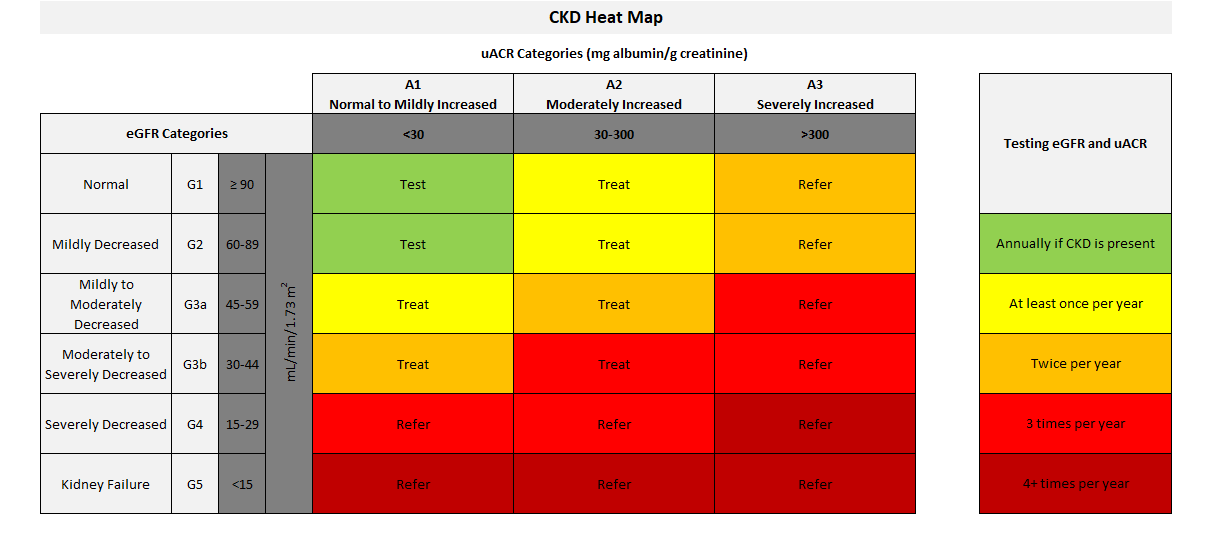
Test: Patient does not have CKD | Treat: Patient has CKD | Refer (to Nephrologist): Patient has CKD
Frequently Asked Questions
Are there any early warning signs of diabetic kidney disease that individuals should watch for before the disease progresses?
The presence of small amounts of albumin in the urine, detected through a uACR Test, serves as an early indication of potential kidney damage in individuals with diabetes.
How does physical activity impact the risk and management of diabetic kidney disease?
Regular physical activity is part of managing blood pressure and blood sugar levels, which are key factors in reducing the risk and managing the progression of diabetic kidney disease.
How often should kidney function tests be performed in patients with type 2 diabetes?
Kidney function tests, including eGFR and uACR, should be conducted annually in diabetic patients or more frequently if CKD is diagnosed.
Can CKD be reversed if caught early, and what treatments are most effective?
Early stages of CKD can potentially be managed effectively with lifestyle changes and strict glycemic control; however, reversal is not typically possible.
What role do medications play in managing CKD for diabetic patients?
Angiotensin-converting enzyme (ACE) inhibitors and Angiotensin II receptor blockers (ARBs) are commonly prescribed to manage CKD in diabetic patients, focusing on controlling blood pressure and reducing kidney stress.
Glucagon-like peptide-1 receptor agonists (GLP-1RAs) have already made a significant impact in the treatment of type 2 diabetes, obesity, and cardiovascular disease. These medications work by activating GLP-1 receptors in the pancreas, leading to enhanced insulin release and reduced glucagon release, which in turn helps to control blood sugar levels. They also promote weight loss and have been shown to improve cardiovascular health. Now, there is growing interest in the potential of GLP-1RAs for treating other conditions, including obstructive sleep apnea (OSA) and chronic kidney disease (CKD).
GLP-1RAs and Obstructive Sleep Apnea
OSA is a chronic sleep disorder associated with multiple comorbidities such as hypertension, obesity, diabetes mellitus, metabolic syndrome, and atherosclerotic cardiovascular diseases. The condition often requires multiple medications, increasing the risk of polypharmacy.
GLP-1RAs have shown promise in addressing diabetes mellitus, obesity, and associated cardiometabolic conditions in patients with OSA. The weight loss induced by GLP-1RAs could potentially improve cardiovascular risk in patients with OSA. Furthermore, a trend towards a decreased risk of sleep apnea syndrome has been observed with the use of GLP-1RAs.
GLP-1RAs and Chronic Kidney Disease
CKD is another condition where GLP-1RAs are showing potential. These drugs have demonstrated renal protective effects, likely resulting from their direct actions on the kidneys and their indirect actions that improve conventional risk factors for diabetic kidney disease (DKD), such as reducing blood glucose levels, blood pressure, and body weight.
The American Diabetes Association guideline recommends GLP-1 receptor agonist treatment for patients with diabetes and CKD. Treatment with GLP-1 receptor agonists has been associated with lower all-cause mortality among patients with advanced-stage CKD.
Future Directions
While the potential of GLP-1RAs in treating OSA and CKD is promising, more research is needed to fully understand their benefits and potential side effects. It's important to note that GLP-1RAs are not a standalone treatment for these conditions. They should be used as part of a comprehensive treatment plan that includes lifestyle and dietary changes.
As we continue to explore the potential of GLP-1RAs, it's clear that these medications could play a significant role in managing a range of health conditions beyond diabetes and obesity. For patients living with OSA and CKD, GLP-1RAs could offer a new avenue for treatment, potentially improving quality of life and health outcomes.
Novo Nordisk, a healthcare company with a century-long history of innovation, has recently addressed concerns regarding the off-label use of semaglutide, particularly its products Wegovy, Ozempic, and Rybelsus, for cosmetic weight loss purposes. Semaglutide is a molecule developed by Novo Nordisk and is the primary ingredient in these FDA-approved medications intended for serious chronic conditions such as diabetes and obesity.
Concerns Over Off-Label Use
The company has observed a broad discussion in mainstream and social media about semaglutide, noting reports of its use for purely cosmetic or aesthetic weight loss. There are also concerns about unauthorized versions of semaglutide being sold, promotions of Ozempic and Wegovy for unapproved uses, and insufficient clinical evaluations by some telehealth providers.
FDA-Approved Indications
Novo Nordisk emphasizes that Wegovy is approved for chronic weight management in adults and certain children with obesity or excess weight with weight-related medical problems, while Ozempic and Rybelsus are approved for adults with type 2 diabetes. Importantly, Ozempic and Rybelsus are not approved for chronic weight management, and none of these medicines should be used for cosmetic weight loss.
Actions Against Unauthorized Sales and Misinformation
The company is actively monitoring and acting against compounding pharmacies, weight loss clinics, and medical spas that claim to sell or offer compounded semaglutide products. Novo Nordisk is the only company in the U.S. with FDA-approved semaglutide products, and there are no FDA-approved generic versions available. Compounded products may not provide the same safety, quality, and effectiveness as FDA-approved drugs and could pose health risks. Novo Nordisk is working to ensure public awareness of the differences between their approved products and other substances being labeled as "semaglutide".
Telehealth and Semaglutide
Novo Nordisk has also noted the trend of weight-management telehealth providers and reports that some may not be providing sufficient clinical evaluations before prescribing semaglutide medicines. The company clarifies that it does not supply semaglutide to telehealth providers and that these medicines should only be prescribed after a thorough consultation and under the supervision of a healthcare provider.
Supporting Proper Use of Semaglutide
Novo Nordisk is taking steps to ensure accurate and scientifically sound information is available to the public and healthcare professionals to support the responsible use of their medicines. This includes focusing promotional and educational materials on FDA-approved indications, providing extensive training to field representatives, and educating the public through direct communications and websites. The company also takes legal action when necessary to address unauthorized use of their brand names and trademarks.
Conclusion
Novo Nordisk is committed to patient safety and the proper use of its medications. While recognizing the expertise of healthcare providers, the company urges that semaglutide medicines be prescribed consistent with their FDA-approved indications. They continue to address the marketplace and societal dynamics to raise awareness and support patient safety, focusing on delivering positive clinical outcomes for those living with chronic diseases.
Frequently Asked Questions
What are the specific health risks associated with the unauthorized or off-label use of semaglutide for cosmetic weight loss?
The unauthorized or off-label use of semaglutide for cosmetic weight loss can pose several health risks. Compounded products that claim to contain semaglutide may not have the same safety, quality, and effectiveness as FDA-approved drugs, potentially exposing patients to health risks. The FDA has received adverse event reports after patients used compounded semaglutide, which could include products that do not contain the same active ingredient as FDA-approved semaglutide. Additionally, the use of semaglutide for cosmetic purposes has not been evaluated for safety, and there are concerns about insufficient clinical evaluations by some telehealth providers. Clinical studies have reported adverse events related to semaglutide, including gastrointestinal disorders, an increase in pulse rate, and diabetic retinopathy.
How does Novo Nordisk plan to enforce actions against unauthorized sales and misinformation more effectively in the future?
Novo Nordisk plans to enforce actions against unauthorized sales and misinformation by actively monitoring and acting against compounding pharmacies, weight loss clinics, and medical spas that falsely advertise or sell compounded semaglutide products. The company has commenced filing legal actions in the US to address false advertising, trademark infringement, and unlawful sales of non-FDA-approved compounded products claiming to contain semaglutide. Novo Nordisk has also launched semaglutide.com as a resource hub to provide information about the responsible use of their FDA-approved semaglutide products and to educate the public on how to spot counterfeit products. The company is working with stakeholders to ensure accurate and scientifically sound information is available to support the responsible use of their medicines.
Are there any ongoing studies or future plans to explore the potential cosmetic uses of semaglutide under safe and approved conditions?
There are no search results explicitly mentioning ongoing studies or future plans to explore the cosmetic uses of semaglutide under safe and approved conditions. However, Novo Nordisk is involved in clinical trials to investigate the efficacy of semaglutide in various conditions, such as obesity-related heart failure (STEP-HFpEF trial). While these studies focus on medical conditions rather than cosmetic weight loss, they contribute to the overall understanding of semaglutide's effects on weight, which could indirectly inform future considerations for its use in weight management.
Page 18 of 23