
In a recent breakthrough, the weight loss medication tirzepatide has been shown to significantly lower systolic blood pressure in adults with obesity, according to a study published in the American Heart Association's journal, Hypertension. This finding opens new doors in the management of hypertension, a condition affecting nearly half of the adult population in the United States.
Key Findings from the Study
Understanding Tirzepatide
Tirzepatide, a medication initially approved for treating type 2 diabetes, functions by mimicking two essential metabolic hormones (glucagon-like peptide 1 or GLP-1 and glucose-dependent insulinotropic polypeptide or GIP) , enhancing insulin secretion and sensitivity. This dual action not only aids in blood sugar regulation but also promotes weight loss by reducing appetite and slowing digestion. Its recent FDA approval for chronic weight management marks a significant advancement in obesity treatment.
Impressive Results and Future Perspectives
The study showcased tirzepatide's potential in lowering blood pressure, rivaling the effectiveness of many hypertension medications. Dr. James A. de Lemos, the lead study author, emphasized the impressive nature of blood pressure reduction, noting the need for further research to understand the mechanisms behind these results.
The Study in Detail
The research, part of the SURMOUNT-1 weight loss study, assessed tirzepatide's impact on blood pressure using 24-hour ambulatory blood pressure monitoring. Participants, who were either on hypertension medications or had normal blood pressure levels, showed significant systolic blood pressure reduction across various doses of tirzepatide. Notably, nighttime systolic blood pressure, a strong predictor for cardiovascular mortality, also decreased.
The Bigger Picture
The study's findings are not just about blood pressure reduction. According to Dr. Michael E. Hall, these results highlight the broader benefits of weight-loss medications in addressing multiple cardiometabolic complications of obesity. However, he also calls for additional research to determine the long-term impact of such medications on cardiovascular events and to understand the effects of discontinuing the medication.
Conclusion
The discovery of tirzepatide's potential to lower blood pressure in individuals with obesity is a promising development in the fight against hypertension and its associated risks. As the medical community welcomes these encouraging results, the anticipation for further research and understanding of tirzepatide's full potential and long-term benefits continues to grow.
Clinical trials are a crucial part of medical research, providing the evidence base for new treatments and interventions. However, there is growing recognition of the inequalities that exist within these trials, particularly in the field of diabetes research. These inequalities span across various dimensions, including race, gender, and socioeconomic status, and can significantly impact the generalizability and applicability of trial results.
Racial Disparities
Racial disparities in clinical trials for diabetes treatments are well-documented. Studies have shown that subjects in these trials in the United States are disproportionately White, compared to the population undergoing treatment. A recent study reported non-white ethnic under-representativeness in eight US trials of type 1 diabetes from 2015 to 2020. This under-representation of non-white participants deprives them of the benefits of trial participation and undermines the goal of reducing health disparities among ethnic groups.
Moreover, racial and ethnic disparities exist in the initiation of newer diabetes medications. These disparities may contribute to worse health outcomes and could widen the existing disparities in diabetes care.
Gender Disparities
Gender disparities in diabetes clinical trials are also a significant concern. Studies have found differences in the control of diabetes and the use of medical appointments between men and women. Women have been found to use health care services more often than men, but this does not necessarily translate to better diabetes control.
Clinical trials of preventive interventions have been associated with greater female enrollment, but sex differences in clinical trials vary by disease category, with both male and female participants underrepresented in different medical fields.
Socioeconomic Disparities
Socioeconomic status (SES) also plays a significant role in the disparities observed in diabetes clinical trials. Lower SES is associated with a higher likelihood of developing type 2 diabetes and experiencing more complications. However, individuals with lower SES are often underrepresented in clinical trials, creating a gap in our understanding of how treatments work in these populations.
Towards Equality in Clinical Trials
Addressing these disparities requires a multi-faceted approach. One key strategy is to ensure that clinical trials are designed to be more inclusive of diverse populations. This includes setting recruitment targets for underrepresented groups and implementing strategies to reach these targets.
In addition, it's crucial to address the systemic barriers that prevent certain groups from participating in trials. This could involve addressing socioeconomic factors that limit access to trials, such as lack of transportation or inability to take time off work, as well as addressing potential mistrust or lack of awareness about clinical trials within certain communities.
Finally, it's important to ensure that the results of clinical trials are analyzed and reported in a way that acknowledges and highlights disparities. This can help to ensure that the findings of trials are applicable to all populations and can contribute to reducing health disparities in the real world.
While inequalities in clinical trials for diabetes treatments are a significant issue, they are not insurmountable. By acknowledging these disparities and taking steps to address them, we can work towards a future where all individuals, regardless of their race, gender, or socioeconomic status, have equal access to the benefits of clinical research.
Exercise is a crucial component in the management of type 2 diabetes. Regular physical activity can improve blood glucose control, positively affecting lipids, blood pressure, cardiovascular events, mortality, and quality of life. It's recommended to get at least 150 minutes per week of moderate-intensity physical activity, which can be achieved by incorporating 20 to 25 minutes of activity every day.
Music can also play a significant role in managing diabetes. Studies have shown that music interventions can enhance a patient's compliance with exercise, improve psychological and physical well-being, and even lower glucose levels. Listening to music while exercising can increase stamina and improve mood, making the workout more enjoyable and effective.
Harnessing the Power of Music in Exercise
The playlists shown below offer a variety of artists and genres, providing diverse, energizing, and engaging soundtracks for workouts.
When creating your own exercise playlist, consider the tempo of the music. Research has shown that music can have an ergogenic effect, increasing exercise performance, delaying fatigue, and enhancing endurance, power, and strength. Fast-paced music can be particularly effective during high-intensity workouts, while slower, more relaxing music may be beneficial during cool-down periods.
Suggestions for More Songs and Playlists
Please let us know if you have suggestions for songs that fit with these playlists. I'm always looking for new music to add to my collection and build into playlists of 65 to 70 minutes each.

GLP-1 receptor agonists are a type of medication used to manage blood sugar levels in people with type 2 diabetes. They work by stimulating insulin production and slowing down gastric emptying. Certain foods can interfere with the effectiveness of these medications or cause unpleasant side effects. Here are some foods to avoid and healthier alternatives to consider when taking GLP-1 medications.
Foods to Avoid
Healthy Alternatives
Remember, it's important to listen to your body and eat slowly, stop eating when you feel full, and stay hydrated. If you have any questions or concerns, always consult with your healthcare provider or a dietitian.
GLP-1 Myth vs. Fact
Myth 1: GLP-1 Medications Are Only for People with Diabetes
Fact: While GLP-1 medications were initially approved for managing type 2 diabetes, they are also effective for weight loss in individuals without diabetes. These medications work by mimicking the natural GLP-1 hormone, which helps regulate blood sugar and appetite, making them beneficial for a broader range of patients. Luraglutide (Victoza and Saxenda), semaglutide (Ozempic and Wegovy), and tirzepatide (Mounjaro and Zepbound) are currently FDA approved for type 2 diabetes and for weight management.
Myth 2: GLP-1 Medications Guarantee Long-Term Weight Loss Without Other Lifestyle Changes
Fact: GLP-1 medications can significantly aid in weight loss; however, their effectiveness is greatly enhanced when combined with lifestyle changes such as diet and exercise. Sustainable weight loss involves a comprehensive approach, including behavioral changes and possibly other medical interventions.
Myth 3: GLP-1 Medications Have No Side Effects
Fact: While GLP-1 medications are generally safe, they can cause side effects such as nausea, diarrhea, and constipation. It’s important for users to be aware of these potential effects and consult healthcare providers for management strategies. Side effects tend to be temporary and may decrease over time.
Frequently Asked Questions
How long does it typically take to see changes in blood sugar levels after starting GLP-1 medications?
The effect of GLP-1 medications on blood sugar levels can typically be seen within a few weeks of starting the treatment.
What are the long-term benefits of using GLP-1 medications for diabetes management?
Long-term use of GLP-1 medications can improve blood sugar control and reduce the risk of cardiovascular complications.
Can lifestyle changes alone replace the need for GLP-1 medications in some cases?
In some cases, substantial lifestyle changes may reduce the dependency on medications, but this should be carefully managed by a healthcare professional.
How does alcohol consumption affect the efficacy of GLP-1 medications?
Alcohol can affect blood sugar levels and potentially interact with GLP-1 medications, so moderation is advised.
Are there any exercise considerations while using GLP-1 medications?
Moderate exercise is recommended, but intense physical activity may require adjustments in medication or diet to maintain stable blood sugar levels.
Type 2 diabetes is a well-known risk factor for several complications, including chronic kidney disease (CKD). Chronic kidney disease occurs when your kidneys can no longer filter blood as well as they should, which can lead to a buildup of wastes in the body. Type 2 diabetes significantly impacts kidney function, and understanding the ways to manage and prevent kidney damage is critical for maintaining long-term health.
How Diabetes Impacts Kidney Function
Your kidneys contain millions of tiny filtering units called glomeruli, structures that remove waste from your bloodstream. In diabetes, high blood sugar levels can damage the blood vessels in the kidneys, impairing glomeruli. Over time, this damage can lead to nephropathy, where the kidneys lose their filtering ability. If left unchecked, this can escalate to end-stage kidney disease, requiring dialysis or a kidney transplant.
Key Tests for Monitoring Kidney Health in Diabetics
Regular monitoring of kidney function is vital for people with diabetes. Here are the two primary tests recommended:
Managing Diabetes to Protect Your Kidneys
Effective management of your diabetes can help prevent or delay kidney damage. Here are some strategies to consider:
Talking with Your Healthcare Provider
Effective communication with your healthcare provider is key to managing your kidney health. Be sure to discuss your test results and understand what they mean. Ask questions about any new symptoms or changes in your health and understand your treatment options.
By taking proactive steps to monitor and manage your health, you can significantly reduce the impact of diabetes on your kidneys and maintain a higher quality of life.
Chronic Kidney Disease (CKD) Heatmap
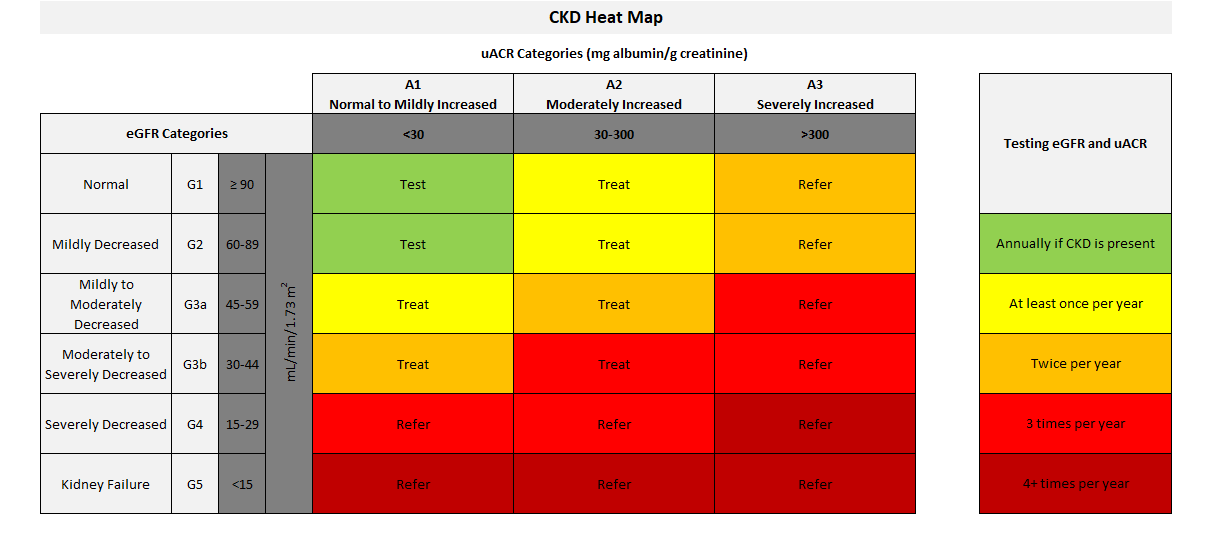
Test: Patient does not have CKD | Treat: Patient has CKD | Refer (to Nephrologist): Patient has CKD
Frequently Asked Questions
Are there any early warning signs of diabetic kidney disease that individuals should watch for before the disease progresses?
The presence of small amounts of albumin in the urine, detected through a uACR Test, serves as an early indication of potential kidney damage in individuals with diabetes.
How does physical activity impact the risk and management of diabetic kidney disease?
Regular physical activity is part of managing blood pressure and blood sugar levels, which are key factors in reducing the risk and managing the progression of diabetic kidney disease.
How often should kidney function tests be performed in patients with type 2 diabetes?
Kidney function tests, including eGFR and uACR, should be conducted annually in diabetic patients or more frequently if CKD is diagnosed.
Can CKD be reversed if caught early, and what treatments are most effective?
Early stages of CKD can potentially be managed effectively with lifestyle changes and strict glycemic control; however, reversal is not typically possible.
What role do medications play in managing CKD for diabetic patients?
Angiotensin-converting enzyme (ACE) inhibitors and Angiotensin II receptor blockers (ARBs) are commonly prescribed to manage CKD in diabetic patients, focusing on controlling blood pressure and reducing kidney stress.
Page 6 of 10